Melasma care, guided by a doctor
Supervised depigmenting treatment with a strict sun-protection routine, because protection is half the treatment.
Consultation with photo review. Medicine paid at the pharmacy.
- Doctor reply
- Under 4 working hours on average
- Photos
- 1 to 3
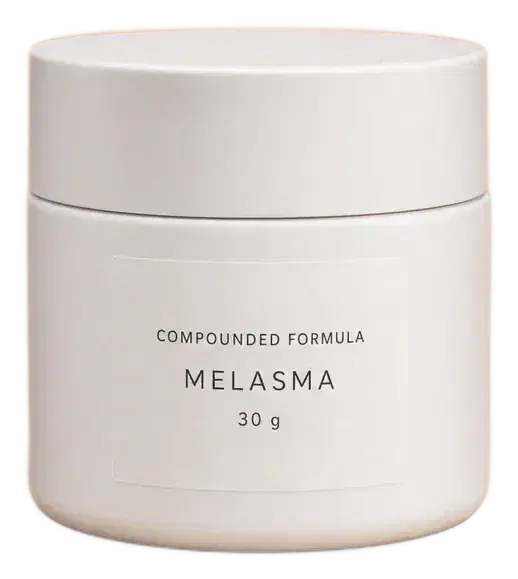
The photo review step
The doctor needs 1 to 3 clear photos to confirm the diagnosis and rule out other causes.
- Daylight, facing a window
- No make-up or filters
- Front and each side of the face
Treatment approach
Treatment is chosen by the doctor after the photo review.
Your skin and your photos
Skin type, the pattern of the problem and how long it has lasted.
The doctor's decision
If a prescription treatment is appropriate, the doctor explains which one, how to use it and for how long. If none of the standard options fits, the doctor can discuss other alternatives in the consultation.
Daily sun protection
Broad-spectrum sun protection every day is the basis of any plan.
What to expect over the weeks
Photo review
The doctor confirms the diagnosis and the plan.
Getting started
Some skin irritation can happen at first.
Supervised course
Daily use with strict sun protection, reviewed by the doctor.
Maintenance
The doctor can adjust the routine in the chat.
One consultation, one clear price
You pay for the doctor's consultation. If a prescription is issued, the medicine is paid at your own pharmacy.
- Consultation reviewed by an EU-licensed doctor
- Private follow-up in the in-app chat
- Full refund if the doctor does not approve
Skin

- Consultation reviewed by an EU-licensed doctor
- Photo review of your skin
- Electronic prescription if approved
Full refund if a review is not approved
What to know before your consultation
Sun protection and other options
Because sunlight drives melasma, broad-spectrum sunscreen every morning, reapplied outdoors, with a hat and shade, is the foundation of care and continues after treatment. An international expert consensus treats chemical peels as a second-line option and advises that lasers are rarely used, and both are done in person by a dermatologist. Reviewing a possible trigger, such as hormonal contraception, with your own doctor may also help. If the doctor decides a prescription is not appropriate, they explain why and the consultation fee is refunded in full.
Your melasma consultation, step by step
You answer a melasma questionnaire about when the patches appeared, sun exposure, pregnancy, contraception and products you already use. A clear photo is required, showing the whole face and a close-up of the patches in daylight without make-up, which also gives a baseline for your review. An EU-licensed doctor reviews everything and writes to you in the private chat if anything is unclear. If treatment is appropriate, you receive an electronic prescription. The cream or gel is dispensed at your pharmacy, a compounded formula takes a few days to prepare, and you pay the pharmacy directly.
Sources
- J Eur Acad Dermatol Venereol (PubMed 19486232). A global survey of the role of ultraviolet radiation and hormonal influences in the development of melasma (Ortonne JP et al., J Eur Acad Dermatol Venereol 2009) (2009)
- National medicines regulator product information database (CIMA). HQUIN 40 mg/g crema (hydroquinone 4%): ficha técnica (SmPC) (2024)
- National medicines regulator product information database (CIMA). Licoforte 40 mg/g gel (hydroquinone 4% with glycolic acid): ficha técnica (SmPC) (2024)
- National medicines regulator product information database (CIMA). Retirides 0.5 mg/g crema (tretinoin 0.05%): ficha técnica (SmPC) (2024)
- Journal of the American Academy of Dermatology (PubMed 16631968). Treatment of melasma: Pigmentary Disorders Academy consensus (Rendon M et al., J Am Acad Dermatol 2006;54(5 Suppl 2):S272-281) (2006)
- Cutis (PubMed 12889718). Efficacy and safety of a new triple-combination agent for facial melasma: two 8-week randomised investigator-blind studies (Taylor SC et al., Cutis 2003;72(1):67-72) (2003)
Sources checked on September 29, 2026
More on this skin concern
Melasma
Dark patches on the face: supervised depigmenting treatment with strict sun protection.
Dark patches on the face
Symmetrical brown patches on the cheeks, forehead or upper lip: what they usually are and what can be done.
Melasma explained, from causes to maintenance
Sun, hormones and why a maintenance plan matters after the first course.
Dark spots on the face: causes, types and what fades each one
Doctor-reviewed articles
Acne
Doctor-selected topical treatment for mild to moderate acne.
Rosacea
Persistent redness and spots, with prescription topical care.
Anti-ageing
Prescription topical care for fine lines and sun-damage texture.
Your questions answered
Who is the melasma consultation for?
Which melasma treatments can the doctor prescribe?
Do I need to send photos?
How long does a melasma course last?
Why is sun protection half the treatment?
Can I treat melasma while pregnant or breastfeeding?
What does it cost, and what happens after the course?
How do I apply a depigmenting treatment?
Which side effects should I report?
Can hormonal contraception make melasma worse?
Are peels or laser an option for melasma?
Your melasma consultation starts here
A doctor reviews your photos and replies in under 4 working hours on average.
Start melasma consultationIf the doctor cannot treat you online, we refund the full amount.
If the doctor does not approve treatment, we refund the full amount. Every consultation is fully refundable. How refunds work