Skin ageing care, guided by a doctor
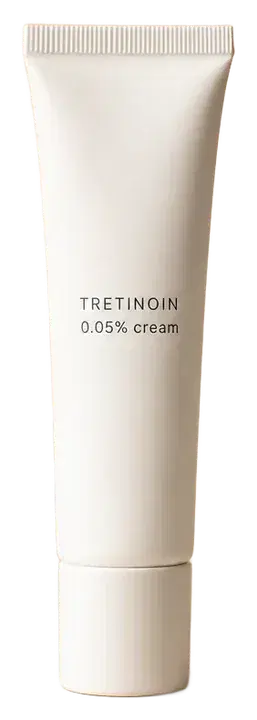
A prescription topical for sun-damaged skin, introduced gradually under medical supervision, with daily sun protection as the base.
Consultation with photo review. Medicine paid at the pharmacy.
- Doctor reply
- Under 4 working hours on average
- Photos
- 1 to 3
The photo review step
The doctor needs 1 to 3 clear photos to confirm the diagnosis and rule out other causes.
- Daylight, facing a window
- No make-up or filters
- Front and each side of the face
Treatment approach
Treatment is chosen by the doctor after the photo review.
The doctor's decision
If a prescription treatment is appropriate, the doctor explains which one, how to use it and for how long. If none of the standard options fits, the doctor can discuss other alternatives in the consultation.
Daily sun protection
Broad-spectrum sun protection every day is the basis of any plan.
What to expect over the weeks
Photo review
The doctor checks your skin and sets a starting routine.
Getting used to it
Dryness or flaking is common while your skin adjusts.
Building the routine
The doctor reviews tolerance and adjusts how often you apply it.
Maintenance
Daily sun protection, and adjustments in the chat.
One consultation, one clear price
You pay for the doctor's consultation. If a prescription is issued, the medicine is paid at your own pharmacy.
- Consultation reviewed by an EU-licensed doctor
- Private follow-up in the in-app chat
- Full refund if the doctor does not approve
Skin

- Consultation reviewed by an EU-licensed doctor
- Photo review of your skin
- Electronic prescription if approved
Full refund if a review is not approved
What to know before your consultation
Who the consultation suits
The online skin consultation is for adults with a common skin concern that a doctor can assess from a questionnaire and clear photos. It is not the right route for severe or scarring skin problems, symptoms affecting the eyes, a dark spot that is changing, or anything that needs a physical examination. Pregnancy and breastfeeding are checked in the questionnaire, because they change what a doctor can safely suggest. If online care is not suitable, the doctor tells you and points you to in-person care.
How the consultation works
You answer a short medical questionnaire about your skin, your history and anything you already use, and add photos taken in daylight. An EU-licensed doctor reviews your answers personally and writes to you in the private chat in your account if anything is unclear. If a treatment is appropriate, the doctor issues an electronic prescription, and you collect the treatment at your own pharmacy and pay the pharmacy for it; each pharmacy decides whether it can dispense it. If the doctor cannot help online, the consultation fee is refunded in full.
Follow-up with your doctor
Skin care of this kind works gradually, so the doctor sets a review point in your plan. At the end of a course you start a follow-up consultation with new photos, and the doctor decides whether to continue, adjust or stop, and nothing renews automatically. You can write to the doctor in the private chat if something does not feel right or your circumstances change. Sudden swelling of the face or difficulty breathing needs emergency care on 112, not a chat message.
Sources
- National medicines regulator product information database (CIMA). Retirides 0.5 mg/g crema (tretinoin 0.05%): ficha técnica (SmPC) (2024)
- Dermatology Practical & Conceptual (PMC12615114, PubMed 41236273). Tretinoin for photodamaged facial skin: systematic review and meta-analysis of randomized controlled trials (Dermatol Pract Concept 2025) (2025)
- American Journal of Clinical Dermatology (PubMed 16060712). Long-term efficacy and safety of tretinoin emollient cream 0.05% in photodamaged facial skin: a two-year randomised placebo-controlled trial (Kang S et al., Am J Clin Dermatol 2005;6(4):245-253) (2005)
- electronic medicines compendium (emc), regulator-approved SmPC. Duac Once Daily 10 mg/g + 50 mg/g gel: Summary of Product Characteristics (2024)
- JAMA. Topical tretinoin improves photoaged skin: a double-blind vehicle-controlled study (Weiss JS et al., JAMA 1988;259(4):527-532) (1988)
Sources checked on September 29, 2026
More on this skin concern
Skin ageing
Fine lines and sun-damage texture: a prescription topical, introduced gradually.
Fine lines and uneven texture
First wrinkles and sun-dulled skin: what a prescription retinoid can do.
Anti-ageing treatments that work: what the evidence says
Daily sun protection first, then what a doctor weighs for fine lines and sun damage.
Acne
Doctor-selected topical treatment for mild to moderate acne.
Rosacea
Persistent redness and spots, with prescription topical care.
Melasma
Supervised depigmenting treatment for dark facial patches.
Your questions answered
Who is the skin-ageing consultation for?
What can the doctor prescribe for fine lines?
How long does the treatment last?
How do I manage the irritation?
Do I need photos, and what about the sun?
Can I use the treatment while pregnant or breastfeeding?
What does it cost, and how do I continue?
When should I stop and contact the doctor?
How is a prescription retinoid different from retinol creams?
Can I have waxing or cosmetic treatments during treatment?
Can I use the treatment if I have eczema or rosacea?
Your skin consultation starts here
A doctor reviews your photos and replies in under 4 working hours on average.
Start anti-ageing consultationIf the doctor cannot treat you online, we refund the full amount.
If the doctor does not approve treatment, we refund the full amount. Every consultation is fully refundable. How refunds work