Hair growth6 minute read
Understanding Androgenetic Alopecia: The Most Common Cause of Hair Loss
Get Finasteride or Dutasteride for hair loss online in the EU. Hi-Doctor connects you with EU-licensed doctors for a consultation for €45 every 90 days or €35 one-off. Receive your prescription in under 24 hours, valid at any EU pharmacy.

DIRECT ANSWER
An online consultation lets an EU-licensed doctor review your case and, if appropriate, issue a prescription that is valid across the EU.
Doctor reply in under 2 hours
Average doctor reply under 2 hours; prescription within 24 hours if approved.
EU-licensed doctors
Every case is reviewed by a licensed clinician.
Valid across the EU
Approved prescriptions can be used at any EU pharmacy.
If you're searching for a Finasteride or Dutasteride prescription online in the EU, you've come to the right place. Androgenetic alopecia, commonly known as pattern baldness, is the most frequent cause of hair loss affecting millions across Europe. The good news: you can get effective treatment through an EU-licensed doctor, without an in-person clinic visit. Hi-Doctor offers online consultations for just €45 every 90 days (cancel anytime) or €35 one-off. If appropriate, you'll receive a digital prescription in under 24 hours, valid at any pharmacy in the EU.
How it works: get your Finasteride or Dutasteride prescription in 4 steps
- Fill the online medical questionnaire (2–3 minutes) and pay the consultation fee of €45 every 90 days or €35 one-off.
- A licensed EU doctor reviews your case in private. If the doctor determines the treatment is NOT appropriate, your payment is refunded automatically, so there is no risk.
- If approved, you receive a valid electronic prescription (PDF file) in your Hi-Doctor account and by email within 24 hours.
- Print the PDF or show it on your phone and present it at any pharmacy in the EU to collect the medication.
Who qualifies for Finasteride or Dutasteride
Finasteride and Dutasteride are medications primarily prescribed for men experiencing androgenetic alopecia. The doctor assesses your case based on several factors, looking for a clear diagnosis of male pattern baldness. They will consider your medical history, any existing conditions, and other medications you are taking. These medications work best for progressive hair thinning rather than sudden or patchy hair loss, which might indicate a different underlying cause. Contraindications include women (especially pregnant women) and individuals with certain liver conditions or prostate issues. The doctor will ensure the treatment is safe and appropriate for you.
What Finasteride and Dutasteride actually do (and don't do)
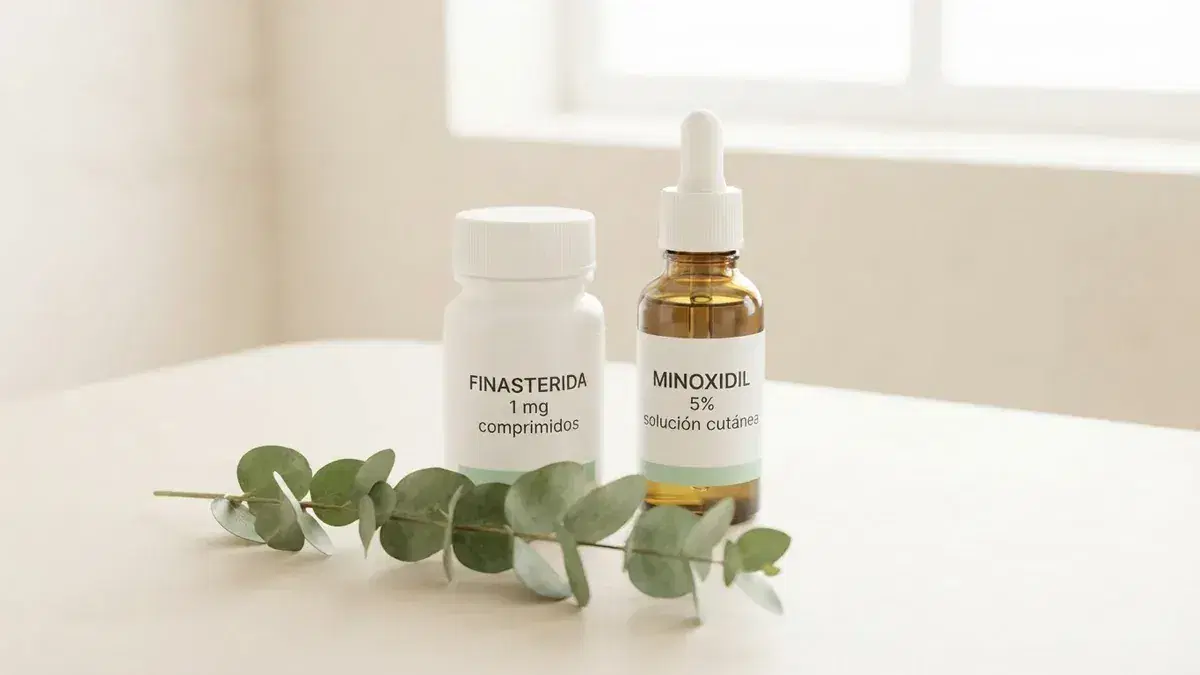
Finasteride and Dutasteride are oral medications that target the root cause of androgenetic alopecia: dihydrotestosterone (DHT). DHT is a hormone that shrinks hair follicles in genetically predisposed individuals. Both Finasteride and Dutasteride work by inhibiting the enzyme 5-alpha-reductase, which converts testosterone into DHT. Dutasteride is generally more potent than Finasteride, blocking more of this conversion. This reduction in DHT levels helps to slow down or even reverse the miniaturization of hair follicles, leading to thicker hair and reduced hair loss. You should expect to see results within 3-6 months, with full effects often visible after 12 months of consistent use. These medications do not cure baldness and require continuous use to maintain benefits. They do not cause hair growth on non-balding areas or treat other types of hair loss.
Side effects and when to stop
Like all medications, Finasteride and Dutasteride can have side effects, though they are generally well-tolerated. Common side effects are rare but can include decreased libido, erectile dysfunction, or ejaculatory disorders. These are usually mild and reversible upon stopping the medication. Less common side effects can include breast tenderness or enlargement. If you experience any persistent or concerning side effects, you should stop the medication and consult your doctor. The Hi-Doctor platform provides a private, auditable chat where you can discuss any concerns with your prescribing doctor.
Why Hi-Doctor vs. walking into a clinic
Getting your Finasteride or Dutasteride prescription online through Hi-Doctor offers significant advantages over traditional clinic visits:
- Speed: Receive your prescription in under 24 hours compared to weeks for a clinic appointment.
- Price: A consultation fee of €45 every 90 days or €35 one-off, with a money-back guarantee if the doctor deems treatment inappropriate, versus variable and often higher private clinic fees.
- Privacy: Everything happens in the app – no waiting rooms, no reception desks, just discreet, RGPD-compliant communication.
- Convenience: Complete your consultation from your phone or computer, anywhere in the EU, without travel or time-off work.
Join over 50,000 satisfied patients who trust Hi-Doctor, reflected in our 4.8 Trustpilot rating. Our EU-licensed doctors provide individualised care directly to you.
COMMON QUESTIONS
Frequently asked questions
If the doctor determines the treatment is not appropriate for you, your consultation fee is refunded automatically. You pay nothing if the treatment isn't approved.