Hair growth8 minute read
The Science Behind Hair Shedding: Why It's a Sign Your Hair Loss Treatment is Working
Experiencing hair shedding after starting a hair loss treatment like Minoxidil or Finasteride? This isn't a bad sign; it's often proof your treatment is working.

DIRECT ANSWER
An online consultation lets a doctor licensed in Spain review your case and, if appropriate, issue a prescription in Spain; each pharmacy decides whether it can dispense it.
Doctor reply in under 2 hours
Average doctor reply under 2 hours; at night and on public holidays it can take longer, always within 24 hours. A prescription only if appropriate.
Doctors licensed in Spain
Every case is reviewed by a doctor licensed in Spain.
Issued in Spain
Each pharmacy decides whether it can dispense an approved prescription; outside Spain, some do not accept PDF prescriptions.
Starting a new hair loss treatment can be a journey of hope. You want results, and you want them fast. So, when you notice an increase in hair shedding after starting treatments like Minoxidil, Finasteride, or Dutasteride, it's natural to feel worried. You might wonder if the treatment is failing or even making things worse. But here's the science-backed truth: for many effective hair loss medications, this initial shedding is a positive sign. It means the treatment is actively working to clear out old, weaker hairs to make way for new, stronger growth. If you are looking to get a prescription for hair loss medication online in the EU, Hi-Doctor makes it simple and fast. An EU-licensed doctor reviews your case, and if appropriate, you receive a prescription in under 24 hours for just €45 every 90 days (cancel anytime) or €35 one-off. This prescription is valid at any pharmacy across the EU.
How it works: get your hair loss medication prescription in 4 steps
- Fill the online medical questionnaire (2–3 minutes) and pay the consultation fee of €45 every 90 days or €35 one-off. This provides the doctor with all necessary information about your health and hair loss.
- A licensed EU doctor reviews your case in private. If the doctor determines the treatment is not appropriate for you, your payment is refunded automatically — you pay nothing. There's no risk.
- If approved, you receive a valid electronic prescription (PDF file) in your Hi-Doctor account and by email within 24 hours. This is Spain's official digital private prescription standard.
- Print the PDF or show it on your phone and present it at any pharmacy in the EU to collect the medication. This electronic prescription is valid at any pharmacy in Spain, Portugal, Italy, France, Germany, Netherlands, Belgium, Austria, Ireland, and other EU countries under cross-border prescription directive 2011/24/EU.
Understanding the Hair Growth Cycle and Why Shedding Occurs
To understand why hair shedding is a good sign, you first need to know how hair grows. Your hair follicles cycle through three main phases:
- Anagen (Growth Phase): Hair actively grows for 2 to 7 years. Most of your hair is in this phase.
- Catagen (Transition Phase): A short phase (2-3 weeks) where growth stops.
- Telogen (Resting Phase): Lasts 2-4 months. Hair rests and eventually detaches. A new hair then begins to grow, pushing out the old one.
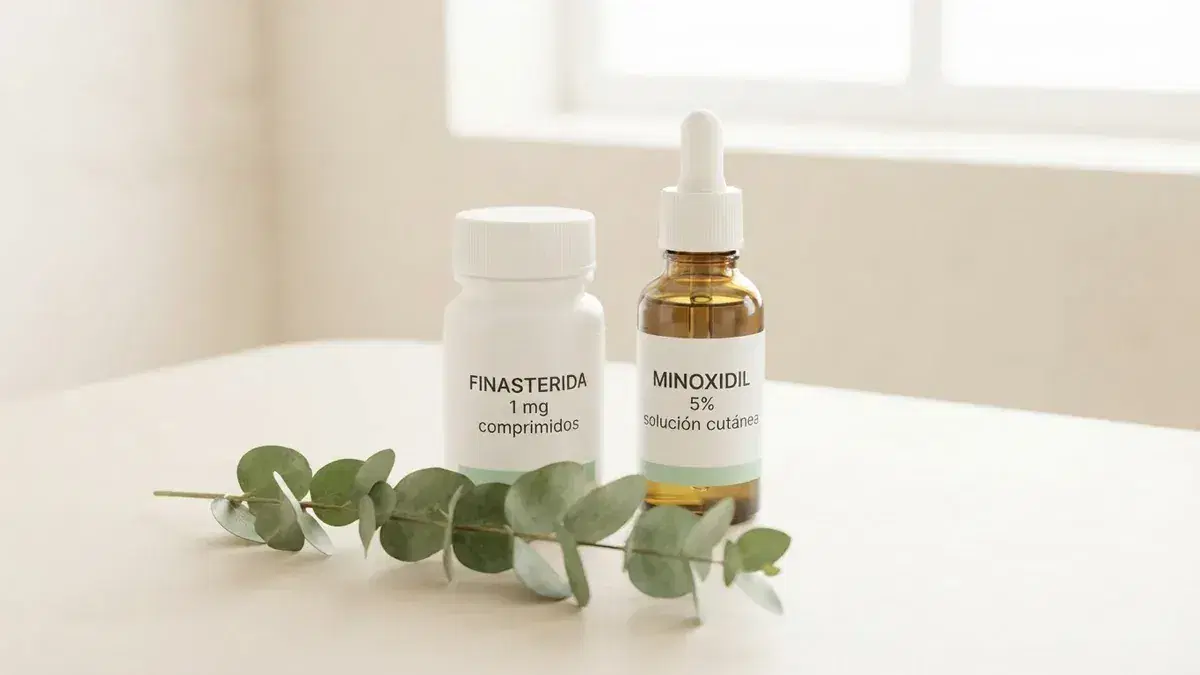
In pattern baldness, the anagen phase shortens, and hair becomes thinner. Hair loss treatments like Minoxidil, Finasteride, and Dutasteride work by influencing this cycle, primarily extending the anagen phase and stimulating dormant follicles. When these treatments kickstart follicles into a new, healthier growth cycle, they often prematurely shed the old, weaker hairs. This 'clearing out' process makes room for stronger, thicker hair to grow. This is why you experience Minoxidil shedding or Finasteride shedding – it's a sign your follicles are being rejuvenated.
Who qualifies for hair loss medication
Our EU-licensed doctors individually review every case to determine if hair loss medication is appropriate for you. They assess your medical history, current health status, and the type and pattern of your hair loss. Generally, doctors look for:
- Diagnosis of androgenetic alopecia (pattern baldness) in men or women.
- Absence of contraindications such as pregnancy, breastfeeding, certain liver conditions, or known allergies to the medication's ingredients.
- Suitability for the specific medication: Minoxidil is topical, while Finasteride and Dutasteride are oral and may have different eligibility criteria.
The doctor will ensure the chosen hair loss treatment aligns with your health profile for safety and effectiveness. Remember, if the doctor finds the treatment inappropriate, your consultation fee is refunded.
What hair loss medication actually does (and doesn't do)
Hair loss medications like Minoxidil, Finasteride, and Dutasteride target the underlying causes of hair thinning and loss, primarily androgenetic alopecia. They work by:
- Minoxidil: A topical solution that increases blood flow to hair follicles and stimulates them to enter the growth phase more quickly. It can help thicken existing hair and promote new growth.
- Finasteride & Dutasteride: Oral medications that block the conversion of testosterone into DHT, a hormone responsible for shrinking hair follicles. By reducing DHT, they help reverse miniaturisation and prevent further hair loss.
What they don't do is instantly regrow a full head of hair or work for all types of hair loss. Realistic timelines show initial shedding in months 1-3, visible early regrowth by months 3-6, and significant improvements after 6+ months of consistent use. You need patience and consistency for results.
Side effects and when to stop
While shedding is a normal part of the process, it's important to be aware of potential side effects:
- Minoxidil: Scalp irritation, dryness, itching, or unwanted facial hair growth.
- Finasteride & Dutasteride: Rarely, sexual side effects (decreased libido, erectile dysfunction), breast tenderness or enlargement, or mood changes.
If you experience severe or persistent side effects, or if shedding continues beyond 3-4 months without any signs of regrowth, consult your doctor. They can assess your situation and adjust your treatment plan. Your health is paramount.
Why Hi-Doctor vs. walking into a clinic
Choosing Hi-Doctor for your hair loss medication prescription offers unparalleled convenience and benefits:
- Speed: Get your prescription in under 24 hours, compared to weeks for an in-person appointment.
- Price: A consultation fee of €45 every 90 days or €35 one-off. No hidden costs, unlike variable private clinic fees.
- Privacy: Everything happens securely in your app, eliminating awkward waiting room encounters.
- Convenience: Consult from anywhere using your phone, avoiding city-centre travel and parking hassles.
- Expertise: Over 50,000 patients served with a 4.8 Trustpilot rating. You receive care from EU-licensed doctors who review your case individually.
- Accessibility: Your electronic prescription is valid at any pharmacy across the entire EU.
Hi-Doctor provides a modern, discreet, and efficient way to access the medical care you need for hair loss.
COMMON QUESTIONS
Frequently asked questions
If our EU-licensed doctor determines that the hair loss treatment is not appropriate for your specific case, your consultation fee is automatically refunded. You pay nothing if the treatment isn't approved.