Hair growth10 minute read
The Hair Pull Test: How Doctors Assess Hair Shedding
Worried about hair shedding? The Hair Pull Test helps doctors assess hair loss. If you're looking to get hair loss medication prescribed online by an EU-licensed doctor, Hi-Doctor provides an online consultation for €45/90 days or €35 on…

DIRECT ANSWER
An online consultation lets an EU-licensed doctor review your case and, if appropriate, issue an electronic prescription; each pharmacy decides whether it can dispense it.
Doctor reply in under 2 hours
Average doctor reply under 2 hours; at night and on public holidays it can take longer, always within 24 hours. A prescription only if appropriate.
EU-licensed doctors
Every case is reviewed by an EU-licensed doctor.
Electronic prescription
Each pharmacy decides whether it can dispense an approved prescription; some do not accept PDF prescriptions.
Experiencing hair shedding can be concerning, and understanding its cause is the first step towards effective treatment. While the hair pull test helps doctors assess hair loss, if you're actively looking for a Finasteride or Minoxidil prescription online in Spain or elsewhere in the EU, Hi-Doctor offers a direct path. You can get a prescription for hair loss medication from an EU-licensed doctor, without an in-person clinic visit. The online consultation costs just €45 every 90 days (cancel anytime) or €35 one-off, and if approved, your digital prescription is issued in under 24 hours, valid at any EU pharmacy. No risk: if the doctor determines treatment isn't appropriate, you get your money back.
How to get your hair loss medication prescription in 4 steps
- Fill the online medical questionnaire (2–3 minutes) and pay the consultation fee of €45 every 90 days or €35 one-off.
- A licensed EU doctor reviews your case in private. If the doctor decides the treatment is not appropriate, your payment is refunded automatically, so there is no risk.
- If approved, you receive a valid electronic prescription (PDF file) in your Hi-Doctor account and by email within 24 hours.
- Print the PDF or show it on your phone and present it at any pharmacy in the EU to collect the medication.
Who qualifies for hair loss medication
EU-licensed doctors at Hi-Doctor assess each case individually to ensure treatment is safe and appropriate. When reviewing your medical questionnaire for medications like Finasteride or Minoxidil, doctors look for several key factors:
- Type of hair loss: The medication is typically prescribed for androgenetic alopecia (male or female pattern baldness).
- Medical history: Doctors consider any existing health conditions, allergies, and other medications you are taking to prevent adverse interactions.
- Specific contraindications: For example, Finasteride is not prescribed to women who are pregnant or planning to become pregnant due to potential risks.
- Age: Hair loss treatments are typically for adults.
If the doctor finds the treatment appropriate for your specific situation, a prescription will be issued. If not, your consultation fee is fully refunded.
What hair loss medication actually does (and doesn't do)
Medications like Finasteride and Minoxidil work through different mechanisms to combat hair loss and promote regrowth.
- Finasteride: This oral medication works by inhibiting the enzyme 5-alpha-reductase, which converts testosterone into dihydrotestosterone (DHT). DHT is a primary hormone responsible for shrinking hair follicles in androgenetic alopecia. By reducing DHT levels, Finasteride helps prevent further hair loss and can promote regrowth of dormant follicles. Results typically become noticeable after 3-6 months of consistent use, with full effects seen after 12 months. It primarily targets male pattern baldness.
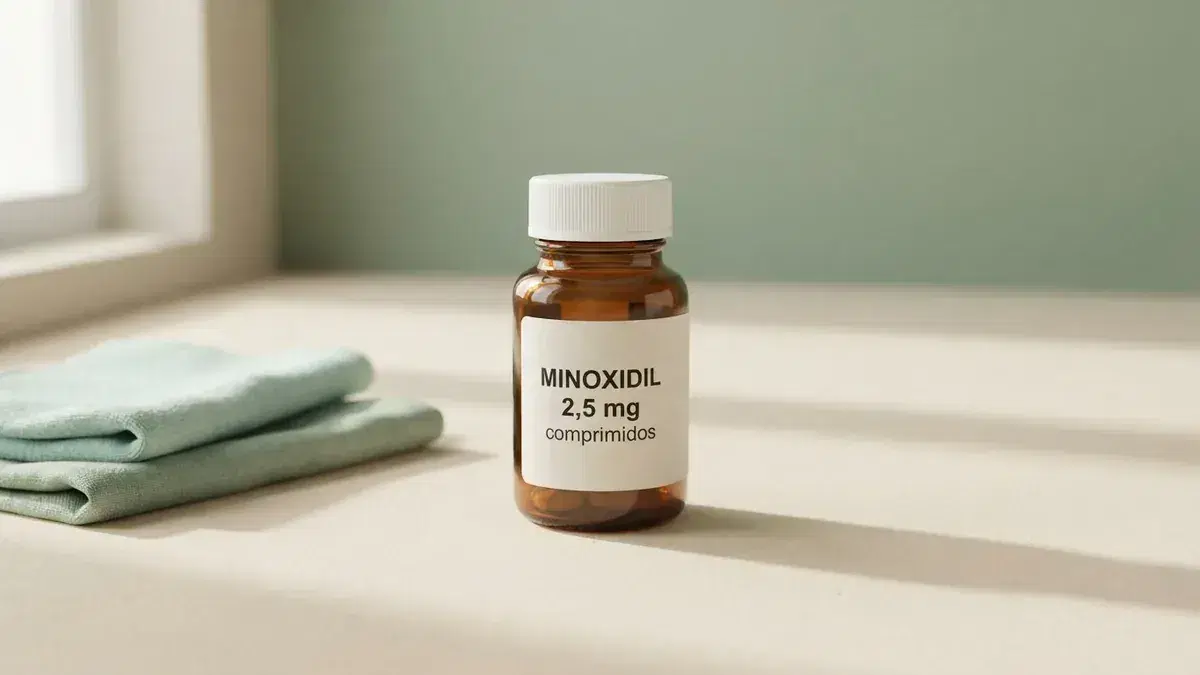
- Minoxidil: Available as a topical solution or foam, and sometimes as low-dose oral tablets (off-label), Minoxidil is a vasodilator. It is believed to work by widening blood vessels and increasing blood flow to hair follicles, which can stimulate hair growth and prolong the anagen (growth) phase of the hair cycle. Minoxidil can be used by both men and women. Visible results usually appear within 4-6 months, and continued use is necessary to maintain benefits.
These medications do not offer instantaneous results. Consistency and patience are key. They are most effective in slowing down hair loss and stimulating regrowth in areas where follicles are still present, rather than bringing back hair in completely bald areas.
Side effects and when to stop
Like all medications, hair loss treatments can have side effects. It's crucial to be aware of these and know when to seek medical advice.
- Finasteride: Possible side effects include decreased libido, erectile dysfunction, and ejaculatory disorders. In rare cases, breast tenderness or enlargement may occur. If you experience persistent or severe side effects, you should stop the medication and consult your doctor.
- Minoxidil (topical): Common side effects include scalp irritation, itching, dryness, or flaking. Unwanted facial hair growth can also occur.
- Minoxidil (oral): Low-dose oral Minoxidil can cause lightheadedness, fluid retention, or increased heart rate.
Always read the patient information leaflet provided with your medication. If you experience any severe or concerning side effects, stop taking the medication immediately and contact your doctor via your private chat in the Hi-Doctor app. Your safety is paramount.
Why Hi-Doctor vs. walking into a clinic
Choosing Hi-Doctor for your hair loss medication prescription offers distinct advantages over traditional clinic visits:
- Speed: Get your prescription in under 24 hours with Hi-Doctor, compared to waiting weeks for a clinic appointment.
- Price: A consultation fee of €45 every 90 days or €35 one-off with Hi-Doctor, versus variable and often higher private clinic fees. Plus, if treatment isn't suitable, your payment is refunded.
- Privacy: All interactions happen within your secure Hi-Doctor account – no reception desks, no waiting rooms. Your data is RGPD-compliant.
- Convenience: Complete your consultation from anywhere with an internet connection, on your phone or computer. No travel, no parking.
- EU-wide validity: Your electronic prescription is valid at any pharmacy in the EU, recognized under cross-border directive 2011/24/EU.
- Trusted service: Join over 50,000 patients who trust Hi-Doctor, reflected in our 4.8 Trustpilot rating.
Your interest guides which specialists we add next.
If your treatment isn't yet among Hi-Doctor's covered specialties, register at hi-doctor.ai so a doctor can notify you the moment we can handle your case. Our EU-licensed doctors issue electronic prescriptions as a PDF valid at any EU pharmacy, and if the doctor decides the treatment isn't appropriate, the consultation fee is refunded automatically.
Register my interest · €45 every 90 days or €35 one-off
Understanding the Hair Pull Test
The hair pull test is a quick, non-invasive procedure used by dermatologists and other healthcare professionals to assess the amount of hair shedding a person is experiencing. It provides valuable information about the severity and potential causes of hair loss. While it's not a definitive diagnostic tool, it can help narrow down the possibilities and guide further investigation.
Key Point 1 The hair pull test is a simple, painless method for assessing hair shedding.
Key Point 2 A positive test, where more than six hairs are pulled out, suggests active hair shedding.
Key Point 3 The test helps differentiate between different types of hair loss, such as telogen effluvium and androgenetic alopecia.
Key Point 4 The results should be interpreted in conjunction with medical history and other diagnostic tests.
Don't see your condition on Hi-Doctor yet?
Hi-Doctor is continuously onboarding EU-licensed specialists across new conditions. Register your interest and we'll notify you the moment a doctor is available for your case. In the meantime, see how the service works: online consultation for €45 every 90 days or €35 one-off, reply within 24 h, full refund if the doctor decides the treatment isn't appropriate.
How the Hair Pull Test is Performed
The hair pull test is a straightforward procedure that can be performed in a doctor's office or even at home. Here's how it's typically done:
- Preparation: The hair should be dry and unwashed for at least 24 hours before the test.
- Grasp a small section of hair: The doctor will gently grasp a section of about 50-60 hairs between the thumb and index finger, close to the scalp.
- Pull gently but firmly: With a steady, gentle pull, the doctor will slide their fingers along the length of the hair, pulling the hairs away from the scalp.
- Examine the pulled hairs: The doctor will count the number of hairs that were pulled out and examine their roots under a microscope, if necessary.
- Repeat in different areas: The test is usually repeated in several different areas of the scalp to get a more accurate assessment.
Interpreting the Results
A normal hair pull test typically results in fewer than six hairs being pulled out with each pull. If more than six hairs are consistently pulled out, it's considered a positive test, indicating active hair shedding. However, it's important to note that a positive test doesn't necessarily mean that you're experiencing significant hair loss. Normal hair shedding is a natural part of the hair growth cycle, and the amount of shedding can vary from person to person.
The appearance of the hair roots can also provide clues about the cause of hair shedding. For example, hairs with small, club-shaped roots are typically in the telogen (resting) phase of the hair cycle, which is often seen in telogen effluvium.
Conditions Diagnosed with the Hair Pull Test
The hair pull test can be helpful in diagnosing several conditions that cause hair loss, including:
- Telogen Effluvium: This is a temporary condition characterized by excessive shedding of hair, often triggered by stress, illness, medication, or hormonal changes.
- Androgenetic Alopecia: Also known as male or female pattern baldness, this is a genetic condition that causes gradual hair thinning.
- Alopecia Areata: This is an autoimmune condition that causes patchy hair loss.
- Tinea Capitis: This is a fungal infection of the scalp that can cause hair loss.
It's important to remember that the hair pull test is just one piece of the puzzle. Your doctor will also consider your medical history, symptoms, and other test results to make an accurate diagnosis.
COMMON QUESTIONS
Frequently asked questions
If the EU-licensed doctor determines that the hair loss treatment is not appropriate for you, your consultation fee is refunded automatically. You pay nothing if the treatment isn't approved, making it a no-risk consultation.