Hair growth11 minute read
Hair loss: when to see a doctor
Understand hair loss symptoms, when to seek medical advice and how to prepare for an individual assessment.
DIRECT ANSWER
An online consultation lets an EU-licensed doctor review your case and, if appropriate, issue an electronic prescription; each pharmacy decides whether it can dispense it.
Doctor reply in under 2 hours
Average doctor reply under 2 hours; at night and on public holidays it can take longer, always within 24 hours. A prescription only if appropriate.
EU-licensed doctors
Every case is reviewed by an EU-licensed doctor.
Electronic prescription
Each pharmacy decides whether it can dispense an approved prescription; some do not accept PDF prescriptions.
This guide explains the differences between normal hair shedding and more significant hair loss, helping you understand when it is advisable to consult a doctor and how to prepare for your appointment. It provides information to support a conversation with a healthcare professional, not to replace it.
Hair loss can affect emotional wellbeing. Different causes can look similar, so a doctor’s assessment matters more than matching your symptoms to a photograph or a product description [5].
Key takeaways
Normal daily hair shedding is different from progressive hair thinning, a receding hairline, or developing bald patches.
Scalp symptoms such as persistent itching, pain, redness, scaling, or sores should always be evaluated by a doctor.
An accurate diagnosis is crucial, as there are many different causes of hair loss, from genetics to underlying health conditions [1].
Preparing for your appointment by documenting your symptoms and medical history can help your doctor make a more effective assessment.
Understanding Hair Loss: More Than Just Shedding
Shedding and visible loss of density are related observations, not diagnoses. Describe what you notice and let the clinician interpret the pattern [3].
Normal Hair Shedding vs. Progressive Hair Loss
Hair naturally cycles through growth, rest and shedding. Increased shedding can have several explanations; telogen effluvium is one possible diagnosis, not a label for all normal shedding [3].
Visible thinning has several possible causes, including hereditary hair loss. It is not synonymous with anagen effluvium or scarring alopecia. Observations worth discussing include:
- Your hair feels less dense overall.
- Your scalp becomes more visible, especially along the part line.
- Your hairline begins to move back from your forehead.
- You find bald spots or patches.
While temporary shedding often resolves on its own once the trigger is removed, progressive hair loss usually requires a medical diagnosis to understand the cause and discuss management options [4].
The Impact of Stress and Illness
The body can react to significant physical or emotional stress by pushing more hairs into the shedding phase of the hair cycle. This condition is a form of telogen effluvium and is a common reason for a sudden, noticeable increase in hair shedding [3].
Common triggers include:
- Recovering from a major surgery or a serious illness, especially with a high fever.
- Experiencing a significant emotional event.
- Significant weight loss over a short period.
- Hormonal shifts, such as those after childbirth or related to thyroid issues.
A recent illness or stressful event is useful history, but it does not establish the cause. A doctor can distinguish shedding from other types of loss and discuss the likely course without promising regrowth [3].
Common Patterns and Signs of Hair Loss
The way hair is lost can provide important clues about the underlying cause. Paying attention to the specific pattern and any accompanying symptoms is helpful when you speak with a doctor.
Gradual Thinning on Top of the Head
Hereditary hair loss can cause recession at the hairline, thinning at the crown or widening of the parting. The pattern varies, and other causes may coexist. A clinician can assess whether it fits hereditary loss [1, 2].
Patchy or Circular Bald Spots
Smooth patches can occur in alopecia areata, an immune-related condition, but patches alone cannot establish that diagnosis. Tell the doctor about affected eyebrows, eyelashes or beard as well as the scalp [1].
Sudden Loosening of Hair
Diffuse shedding may follow illness or stress, but medicines and nutritional problems can also contribute. Describe whether you see shedding, breakage or both; a doctor can examine the distinction [3].
When to see a doctor
It is always best to consult a doctor if you are worried about your hair loss. Self-diagnosis can be misleading, as many different conditions can look similar. Schedule an appointment with your primary care physician (medico di base) or a dermatologist if you experience any of the following:
- Sudden or rapid hair loss: A noticeable increase in shedding or thinning over a short period.
- Patchy hair loss: The appearance of bald spots on your scalp, beard, or eyebrows.
- An unusual pattern of loss: Any pattern that does not fit the typical gradual thinning on top of the head.
- Scalp symptoms: Your hair loss is accompanied by itching, pain, burning, redness, scaling, or sores on your scalp [2].
- Concerns about an underlying condition: You have other symptoms like fatigue, joint pain, skin rashes, or unexplained changes in weight.
- Emotional distress: Your hair loss is causing you significant anxiety or affecting your quality of life [5].
- You are pregnant or breastfeeding: It is essential to discuss any health concerns with a doctor during this time before considering any course of action.
- You are taking prescribed medication: Do not stop taking any prescribed medicine without first consulting the prescribing doctor.
Preparing for Your Medical Consultation
Being prepared for your appointment can help you and your doctor have a more productive conversation. A thorough history is one of the most valuable tools a doctor has for diagnosing hair loss [4].
Documenting Your Symptoms
Before your visit, take some time to think about the details of your hair loss. It can be helpful to write down the answers to these questions:
- When did you first notice the hair loss?
- Did it start suddenly or gradually?
- Is the hair thinning all over, or is it in specific spots?
- Are you shedding more hair than usual?
- Do you have any symptoms on your scalp, like itching or pain?
Gathering Your Medical History
Your overall health is directly linked to the health of your hair. Make a list of:
- Any past or current medical conditions (e.g., thyroid disease, anaemia, autoimmune disorders).
- All medications, vitamins, and supplements you are currently taking, including over-the-counter products.
- Any family members who have experienced significant hair loss.
Thinking About Your Lifestyle
Recent life events can also play a role. Be ready to discuss:
- Any recent illnesses, surgeries, or periods of high fever.
- Significant emotional or psychological stress you have been under.
- Recent changes to your diet, such as starting a restrictive eating plan.
- Your typical hair care routine, including any chemical treatments or tight hairstyles [1].
The Diagnostic Process: What to Expect
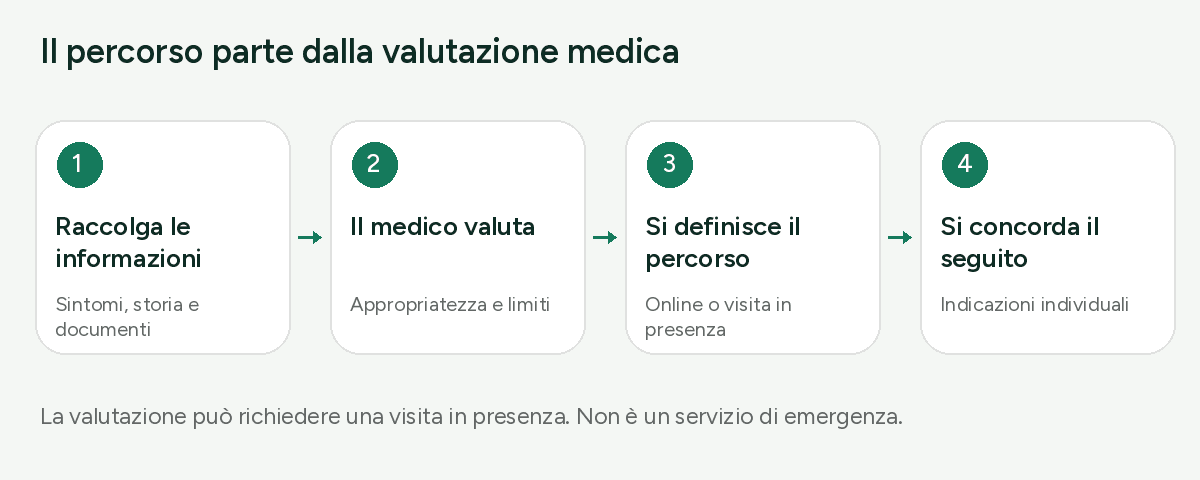
A doctor will use the information you provide, along with a physical examination and sometimes further tests, to determine the cause of your hair loss.
The Physical Examination
The clinician examines the pattern of loss, scalp and hair, and may also examine the nails. Magnification or a gentle pull test can add information that ordinary photographs do not show [4].
Potential Diagnostic Tests
In many cases, a diagnosis can be made based on your history and the physical exam alone. However, if an underlying medical condition is suspected, your doctor may recommend further tests. These are selected on a case-by-case basis and may include:
- Blood tests: To check for issues like thyroid problems, iron deficiency (anaemia), or hormonal imbalances.
- Scalp biopsy: In some cases, particularly if the diagnosis is uncertain or if scarring is suspected, the doctor may take a very small skin sample from your scalp for analysis under a microscope [4].
The Role of Online Consultations
An online assessment can help begin the discussion, but photographs cannot replace examination of the scalp when it is needed. For Hi Doctor, a doctor licensed in Spain assesses each case and decides whether an online consultation or a treatment is appropriate. If a prescription is issued, it is issued in Spain; it is not an Italian Sistema TS/NRBE prescription. Each pharmacy decides whether it can dispense it under the applicable rules, and a paper copy may be needed. If the doctor declines, Hi Doctor refunds the full consultation fee. Medical communication takes place in the in-app private account chat.
A Step-by-Step Guide to Addressing Your Hair Loss Concerns
Navigating hair loss can feel overwhelming. Following a clear process can help you take control and seek the right help.
- Observe and Record. Pay attention to the pattern, speed, and type of hair loss you are experiencing. Note any scalp symptoms. You can take photos in consistent lighting as agreed with your doctor to track changes for your own reference and to share with your doctor, but avoid using them to diagnose yourself.
- Review Your Health and History. Before your appointment, gather the information discussed in the "Preparing for Your Consultation" section. This includes your medical history, a full list of medications and supplements, family history of hair loss, and any recent significant life events or stressors.
- Schedule a Consultation. Make an appointment with a healthcare professional. You can start with your primary care physician (medico di base), who can provide an initial assessment and a referral to a dermatologist if necessary. Alternatively, you can seek a private consultation directly with a dermatologist. You can read about the doctors licensed in Spain on the doctors page.
- Discuss Openly with Your Doctor. During your appointment, share all the information you have gathered. Be honest about how the hair loss is affecting you emotionally. Do not hesitate to ask questions to ensure you fully understand the diagnostic process, the potential causes, and the next steps.
Comparing Common Hair Loss Scenarios
This table provides a simplified comparison of three common hair loss presentations. It is for informational purposes only and is not a diagnostic tool.
| Feature | Temporary Shedding (e.g., Telogen Effluvium) | Progressive Thinning (e.g., Hereditary Loss) | Patchy Loss (e.g., Alopecia Areata) |
|---|---|---|---|
| Onset | May become noticeable after a trigger | Often gradual | Can appear unexpectedly |
| Pattern | Diffuse shedding from all over the scalp | Thinning on the top/crown, receding hairline | One or more distinct, smooth, round bald patches |
| Scalp Symptoms | Scalp usually appears normal and is not inflamed | Scalp is typically normal, without itching or pain | Scalp is usually smooth and normal, without scaling |
| Common Triggers | Major illness, surgery, stress, childbirth, nutritional deficiency [3] | Genetic predisposition and hormonal factors [1] | Autoimmune response [1] |
For more information on different approaches to hair health, you can explore resources on hair growth.
Sources
COMMON QUESTIONS
Frequently asked questions
Yes, hairstyles that constantly pull on the hair follicles, such as very tight ponytails, braids, or hair extensions, can lead to a type of hair loss called traction alopecia [1]. Over time, this persistent tension can cause inflammation and permanent damage to the follicles, preventing hair from regrowing in those areas.