Hair growth6 minute read
Oral Minoxidil for Women: New Avenues in Hair Thinning
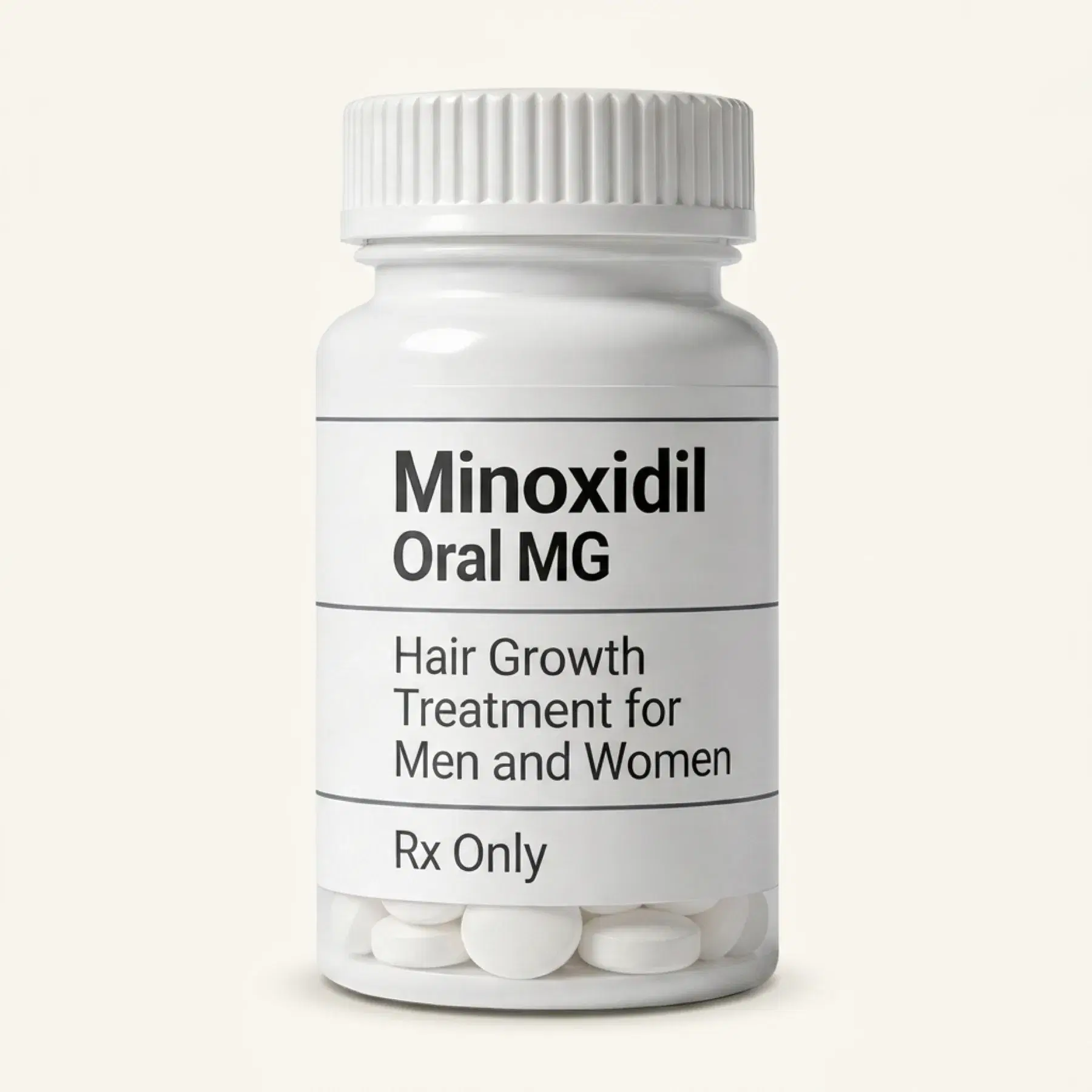
Oral minoxidil is emerging as a promising treatment for female pattern hair loss, offering a systemic approach to stimulating hair growth. This medication, traditionally used for hypertension, has been repurposed at low doses to.
DIRECT ANSWER
An online consultation lets an EU-licensed doctor review your case and, if appropriate, issue an electronic prescription; each pharmacy decides whether it can dispense it.
Doctor reply in under 2 hours
Average doctor reply under 2 hours; at night and on public holidays it can take longer, always within 24 hours. A prescription only if appropriate.
EU-licensed doctors
Every case is reviewed by an EU-licensed doctor.
Electronic prescription
Each pharmacy decides whether it can dispense an approved prescription; some do not accept PDF prescriptions.
HOW IT WORKS
From consultation to collection
- 1
Consultation
Answer a secure medical questionnaire online.
- 2
Doctor reviews
An EU-licensed doctor personally assesses your case.
- 3
Prescription only if appropriate
The doctor replies in under 2 hours on average and issues a prescription only if it is clinically appropriate.
- 4
Collect at the pharmacy you choose
Take an approved prescription to the pharmacy you choose; each pharmacy decides whether it can dispense it.
What is Female Pattern Hair Loss (FPHL)?
Female Pattern Hair Loss (FPHL), also known as androgenetic alopecia in women, is a common condition characterized by progressive thinning of hair on the scalp. Unlike male pattern baldness, which often presents as a receding hairline or bald spot, FPHL typically manifests as a widening part or diffuse thinning over the crown, often sparing the frontal hairline. This condition affects millions of women across the EU, with prevalence increasing with age, impacting approximately 30% of women by age 50 and up to 50% by age 70.
How Does Oral Minoxidil Work for Hair Loss?
Minoxidil was initially developed as an oral medication for high blood pressure. Its unexpected side effect of hair growth led to its reformulation as a topical treatment. However, recent research has explored the efficacy of low-dose oral minoxidil for hair loss. The exact mechanism by which minoxidil stimulates hair growth is not fully understood, but it is believed to involve vasodilation, increasing blood flow and nutrient delivery to hair follicles. It also appears to prolong the anagen (growth) phase of the hair cycle and enlarge miniaturized follicles.
A 2021 review published in the Journal of the American Academy of Dermatology highlighted that low-dose oral minoxidil showed significant improvement in hair density for 62% of women with FPHL after 6 months of treatment.
Noticing changes in your hair?
An EU-licensed doctor can privately review your case and decide whether a hair-growth treatment is appropriate for you. Online consultation for 45 € every 90 days or 35 € one-off, reply within 24 h.
Who is a Candidate for Oral Minoxidil?
Oral minoxidil may be considered for women experiencing FPHL who have not responded adequately to topical treatments, or who find topical applications inconvenient. It is also an option for those with diffuse hair thinning or other forms of alopecia, under strict medical guidance. A thorough medical history and examination are crucial to determine suitability, ruling out other causes of hair loss and identifying potential contraindications.
What are the Typical Dosages and Treatment Timelines?
For FPHL, oral minoxidil is typically prescribed at very low doses, significantly less than those used for hypertension. Common starting doses range from 0.25 mg to 1.25 mg once daily, which may be gradually increased based on response and tolerability. Visible improvements in hair growth usually become noticeable after 3 to 6 months of consistent treatment, with full effects often observed after 12 months. Continued use is generally required to maintain results.
| Timeframe | Expected Outcome | Considerations |
|---|---|---|
| 0-3 Months | Initial shedding may occur, often a sign of treatment working. Minimal new growth visible. | Patience is key. Side effects, if any, may emerge. |
| 3-6 Months | First signs of new hair growth, potentially finer hairs. Reduced shedding. | Continued assessment of efficacy and tolerability. |
| 6-12 Months | Increased hair density and thickness. Noticeable cosmetic improvement. | Optimization of dosage if needed. Consistent adherence. |
| 12+ Months | Maintenance of results. Ongoing monitoring for long-term safety. | Regular follow-ups with a healthcare provider. |
What are the Potential Side Effects of Oral Minoxidil?
While generally well-tolerated at low doses, oral minoxidil can have side effects. The most common is hypertrichosis (unwanted hair growth) on other parts of the body, such as the face. Other potential side effects may include dizziness, lightheadedness, fluid retention, and, less commonly, palpitations or changes in blood pressure. These effects are typically mild and often dose-dependent. Any concerning symptoms should be promptly discussed with a healthcare provider.
Key Takeaways
- Oral minoxidil is a systemic treatment option for female pattern hair loss, especially when topical treatments are insufficient or inconvenient.
- It works by increasing blood flow to hair follicles and extending the hair growth phase.
- Low doses (typically 0.25 mg to 1.25 mg daily) are used for FPHL.
- Results usually appear within 3-6 months, with full effects at 12 months of consistent use.
- Potential side effects include unwanted hair growth, dizziness, and fluid retention, which are often mild.
- Medical supervision is essential to determine suitability and manage potential side effects.
COMMON QUESTIONS
Frequently asked questions
Yes, if an EU-licensed doctor determines it is clinically appropriate for your specific condition after reviewing your medical questionnaire. Our doctors assess each case individually to ensure treatment suitability and patient safety.