Hair growth6 minute read
Hair Loss Treatment and Breastfeeding: What's Safe?
Concerned about hair loss while breastfeeding? Learn which treatments are safe and how to get expert advice from an EU-licensed doctor. Our €35 online consultation provides an electronic prescription in under 24 hours, valid at any EU.
DIRECT ANSWER
An online consultation lets an EU-licensed doctor review your case and, if appropriate, issue an electronic prescription; each pharmacy decides whether it can dispense it.
Doctor reply in under 2 hours
Average doctor reply under 2 hours; at night and on public holidays it can take longer, always within 24 hours. A prescription only if appropriate.
EU-licensed doctors
Every case is reviewed by an EU-licensed doctor.
Electronic prescription
Each pharmacy decides whether it can dispense an approved prescription; some do not accept PDF prescriptions.
Navigating hair loss while breastfeeding requires careful consideration of treatment safety for both you and your baby. Many common hair loss medications are not suitable during this period. However, you can still get expert guidance from an EU-licensed doctor to understand your options. Hi-Doctor offers an online consultation for €45 every 90 days (cancel anytime) or €35 one-off, providing a valid electronic prescription in under 24 hours if appropriate, valid at any pharmacy across the EU.
How it works: get your hair loss treatment prescription in 4 steps
- Fill the online medical questionnaire (2–3 minutes) and pay the consultation fee of €45 every 90 days or €35 one-off.
- A licensed EU doctor reviews your case in private. If the doctor determines the treatment is not appropriate for you, your payment is refunded automatically, so there is no risk.
- If approved, you receive a valid electronic prescription (PDF file) in your Hi-Doctor account and by email within 24 hours.
- Print the PDF or show it on your phone and present it at any pharmacy in the EU to collect the medication.
Who qualifies for hair loss treatment while breastfeeding
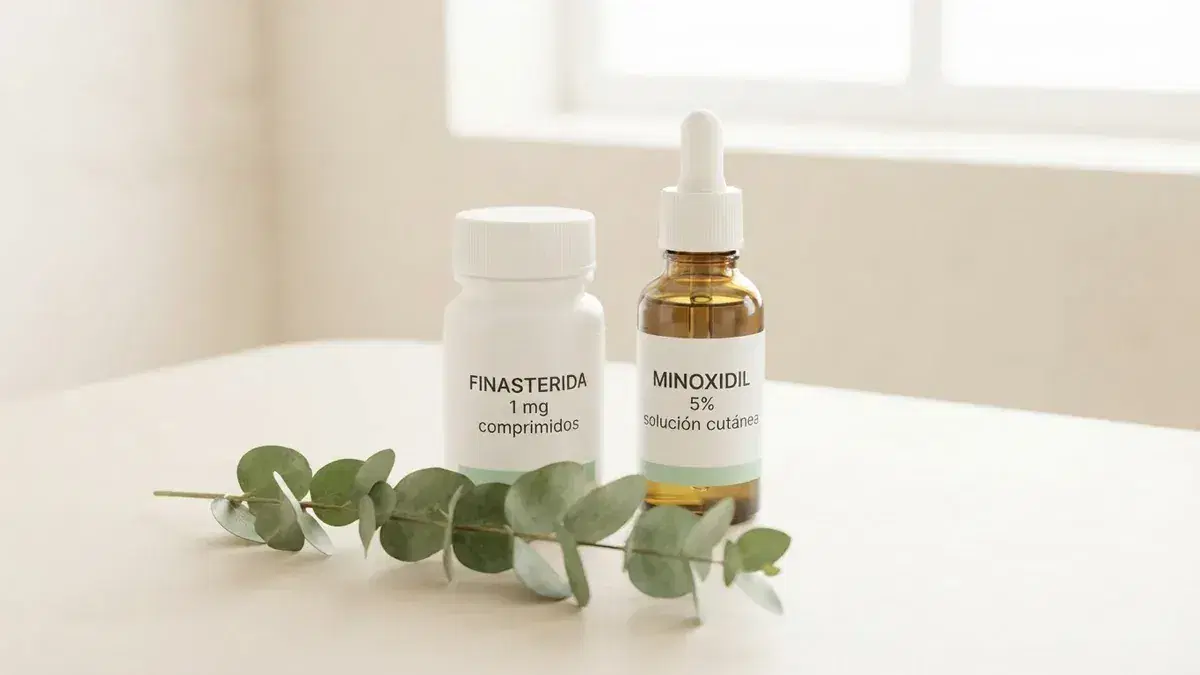
When considering hair loss treatments during breastfeeding, safety for your infant is the primary concern. Our EU-licensed doctors meticulously evaluate your medical history and current breastfeeding status. They look for treatments with a proven safety profile during lactation. Many potent hair loss medications, such as finasteride and dutasteride, are strictly contraindicated. Topical minoxidil may be considered in some cases, but only after a thorough assessment and with strict instructions to minimize infant exposure. The doctor's decision prioritises your baby's health above all else.
What hair loss treatments actually do (and don't do) while breastfeeding
During breastfeeding, the range of safe and effective hair loss treatments is limited. Most conventional treatments work by altering hormone levels or stimulating follicular growth through systemic absorption, which poses a risk to the infant. The doctor will focus on options that have minimal systemic absorption or are considered safe for infants. This often means lifestyle adjustments, nutritional support, and very specific topical applications. Realistic timelines for results will be discussed, understanding that significant improvement might only be possible after you stop breastfeeding and can access a wider range of treatments.
Don't see your condition on Hi-Doctor yet?
Hi-Doctor is continuously onboarding EU-licensed specialists across new conditions. Register your interest and we'll notify you the moment a doctor is available for your case. In the meantime, see how the service works: online consultation for €45 every 90 days or €35 one-off, reply within 24 h, full refund if the doctor decides the treatment isn't appropriate.
Side effects and when to stop a hair loss treatment
Even with approved topical treatments like minoxidil, minor side effects can occur, such as scalp irritation or unwanted hair growth in adjacent areas. It is crucial to monitor for any unusual reactions in both yourself and your baby. If you notice any adverse effects, discontinue the treatment immediately and consult your doctor. For any treatment, the doctor will provide clear instructions on application, expected outcomes, and red flags that indicate you should stop use and seek further medical advice.
Why Hi-Doctor vs. walking into a clinic
Choosing Hi-Doctor for your hair loss concerns, especially while breastfeeding, offers unparalleled benefits:
- Speed: Get a doctor's review and prescription in under 24 hours, compared to weeks for a traditional appointment.
- Price: An online consultation fee of €45 every 90 days or €35 one-off, with a money-back guarantee if treatment is not appropriate. No hidden costs or variable private clinic fees.
- Privacy: All consultations happen within your secure Hi-Doctor account. No waiting rooms, no reception desks, just private, RGPD-compliant chat.
- Convenience: Access an EU-licensed doctor from your phone, anywhere, anytime. No travel, no parking, no time off work.
With over 50,000 patients served and a 4.8 Trustpilot rating, Hi-Doctor provides a trusted, efficient, and discreet way to manage your health needs.
Your interest guides which specialists we add next.
If your treatment isn't yet among Hi-Doctor's covered specialties, register at hi-doctor.ai so a doctor can notify you the moment we can handle your case. Our EU-licensed doctors issue electronic prescriptions as a PDF valid at any EU pharmacy, and if the doctor decides the treatment isn't appropriate, the consultation fee is refunded automatically.
COMMON QUESTIONS
Frequently asked questions
If the doctor determines that a hair loss treatment is not appropriate for you, especially while breastfeeding, your consultation fee is refunded automatically. You pay nothing if the treatment isn't approved.