Hair growth6 minute read
Hair Loss Treatment Alternatives: What to Do When Standard Treatments Fail
Struggling with hair loss even after trying standard treatments? Discover how to get a Dutasteride prescription online from an EU-licensed doctor for just €45 every 90 days or €35 one-off.

DIRECT ANSWER
An online consultation lets an EU-licensed doctor review your case and, if appropriate, issue an electronic prescription; each pharmacy decides whether it can dispense it.
Doctor reply in under 2 hours
Average doctor reply under 2 hours; at night and on public holidays it can take longer, always within 24 hours. A prescription only if appropriate.
EU-licensed doctors
Every case is reviewed by an EU-licensed doctor.
Electronic prescription
Each pharmacy decides whether it can dispense an approved prescription; some do not accept PDF prescriptions.
Are you searching for a Dutasteride prescription online because standard hair loss treatments haven't worked for you? You're in the right place. Yes, you can get a Dutasteride prescription through a licensed EU doctor without an in-person visit. Hi-Doctor connects you with EU-licensed medical professionals who review your case individually. If a doctor finds Dutasteride appropriate for you, a valid electronic prescription is issued in under 24 hours for just €45 every 90 days (cancel anytime) or €35 one-off. This prescription is valid at ANY EU pharmacy, making it convenient to pick up your medication.
How it works: get your Dutasteride prescription in 4 steps
- Fill the online medical questionnaire (2–3 minutes). Provide your medical history and current symptoms securely through our platform.
- A licensed EU doctor reviews your case in private. Our doctors assess your information thoroughly and confidentially.
- If appropriate, you receive a valid electronic prescription within 24 hours. The prescription is delivered to your private account and by email, ready for use.
- Pick up your medication at any EU pharmacy. Your prescription is valid across Spain, Portugal, Italy, France, Germany, and all other EU countries.
Who qualifies for Dutasteride
Dutasteride is a potent treatment for androgenetic alopecia (male pattern baldness), particularly when other treatments like finasteride have not yielded sufficient results. When reviewing your case for a Dutasteride prescription online, our EU-licensed doctors look for specific criteria:
- Diagnosis of Androgenetic Alopecia: Dutasteride is primarily prescribed for this condition.
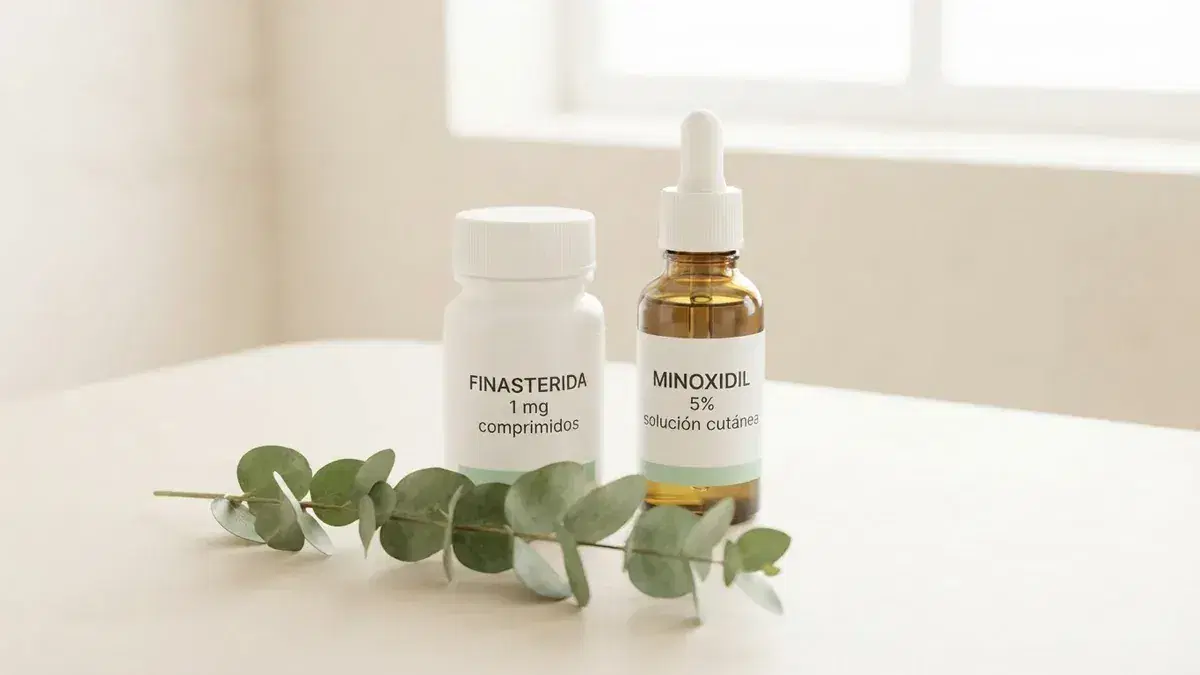
- Previous Treatment History: Often considered when finasteride or minoxidil have been ineffective or partially effective.
- Overall Health: Doctors assess your general health, including liver function and any pre-existing conditions.
- Absence of Contraindications: This includes severe liver disease, known hypersensitivity to Dutasteride or other 5-alpha-reductase inhibitors, and for women (especially those who are pregnant or may become pregnant) due to the risk of birth defects.
The doctor's review ensures Dutasteride is safe and appropriate for your specific situation. If the doctor finds it appropriate, you will receive your prescription.
Noticing changes in your hair?
An EU-licensed doctor can privately review your case and decide whether a hair-growth treatment is appropriate for you. Online consultation for 45 € every 90 days or 35 € one-off, reply within 24 h.
What Dutasteride actually does (and doesn't do)
Dutasteride is a 5-alpha reductase inhibitor, similar to finasteride, but it blocks both type 1 and type 2 isoenzymes. This leads to a more significant reduction in dihydrotestosterone (DHT) levels in the body, which is the primary hormone responsible for shrinking hair follicles in androgenetic alopecia. This stronger action can result in:
- Reduced Hair Loss: It effectively stops further hair thinning and shedding.
- Hair Regrowth: Many users experience significant regrowth of existing, miniaturized hairs, leading to increased hair density.
Realistic Timelines: Like most hair loss treatments, Dutasteride requires patience. Noticeable improvements typically begin after 3–6 months of consistent use, with full effects often seen after 12 months or more. It doesn't instantly regrow hair, nor does it work for all types of hair loss (e.g., alopecia areata).
Side effects and when to stop
While effective, Dutasteride can have side effects. It's crucial to be aware of these and discuss any concerns with your doctor. Common side effects, similar to finasteride, may include:
- Decreased libido
- Erectile dysfunction
- Ejaculation disorders
- Breast tenderness or enlargement (gynecomastia)
These side effects are usually mild and temporary, often resolving with continued use or after stopping the medication. However, if you experience any severe or persistent side effects, such as allergic reactions (rash, itching, swelling), depression, or changes in breast tissue (lumps, pain, nipple discharge), you should stop taking Dutasteride and seek immediate medical attention. Your Hi-Doctor physician can advise you on the best course of action and when to discontinue treatment.
Why Hi-Doctor vs. walking into a clinic
Choosing Hi-Doctor for your Dutasteride prescription online offers unparalleled advantages over traditional clinic visits:
- Speed: Get your electronic prescription in under 24 hours, compared to weeks of waiting for a clinic appointment.
- Price: €45 every 90 days or €35 one-off for the online consultation, a fraction of variable private clinic fees.
- Privacy: All consultations and communication happen in our secure, RGPD-compliant app. No waiting rooms, no reception desks, just discreet care.
- Convenience: Access expert medical advice and obtain your prescription from your phone, anywhere in the EU. No travel, no time off work.
- Trust: Join over 50,000 satisfied patients who rate us 4.8 on Trustpilot. Our EU-licensed doctors provide individualised care, ensuring your safety and well-being.
Everything happens within the app – no WhatsApp, no SMS, no unnecessary delays. Just efficient, professional healthcare.
An EU doctor can review your case today.
Fill in the online questionnaire in a few minutes. A licensed doctor reviews your case and, if appropriate, issues a valid electronic prescription within 24 hours, straight into your private account.
COMMON QUESTIONS
Frequently asked questions
Yes, it is legal to obtain a prescription for Dutasteride online from an EU-licensed doctor, provided the doctor conducts a proper medical assessment and deems the treatment appropriate for you. Hi-Doctor ensures all consultations adhere to EU medical guidelines.