Hair growth6 minute read
Hair Loss Treatment: Knowing When to Adjust Your Plan
Struggling with hair loss? Get a prescription for hair loss treatment online from an EU-licensed doctor. Consultation fee of €45 every 90 days or €35 one-off, prescription in under 24 hours, valid at any EU pharmacy. No risk: money-back…
DIRECT ANSWER
An online consultation lets an EU-licensed doctor review your case and, if appropriate, issue an electronic prescription; each pharmacy decides whether it can dispense it.
Doctor reply in under 2 hours
Average doctor reply under 2 hours; at night and on public holidays it can take longer, always within 24 hours. A prescription only if appropriate.
EU-licensed doctors
Every case is reviewed by an EU-licensed doctor.
Electronic prescription
Each pharmacy decides whether it can dispense an approved prescription; some do not accept PDF prescriptions.
If you are looking for a hair loss treatment prescription in the EU, you have come to the right place. You can get hair loss medication online through our licensed EU doctors. Our online consultation costs just €45 every 90 days (cancel anytime) or €35 one-off, and if appropriate, you receive your prescription in under 24 hours. It is valid at any pharmacy in the EU, from Spain to Germany. No risk — if the doctor says no, you get your money back.
How it works: get your hair loss treatment prescription in 4 steps
- Fill out our quick online medical questionnaire (2–3 minutes) and pay the consultation fee of €45 every 90 days or €35 one-off.
- A licensed EU doctor reviews your case privately. If the doctor determines the hair loss treatment is NOT appropriate for you, your payment is refunded automatically, so there is no risk.
- If approved, you receive a valid electronic prescription (PDF file) in your Hi-Doctor account and by email within 24 hours.
- Print the PDF or show it on your phone and present it at any pharmacy in the EU to collect your medication.
Who qualifies for hair loss treatment
Our EU-licensed doctors assess each case individually. They look for specific criteria to ensure the treatment is safe and effective for you. Generally, hair loss treatments like minoxidil, finasteride, or dutasteride are considered for adult patients experiencing androgenetic alopecia (pattern baldness). The doctor will review your medical history, current health status, and any other medications you are taking to determine if these treatments are suitable. They will also consider any contraindications, such as specific medical conditions or allergies.
What hair loss treatment actually does (and doesn't do)
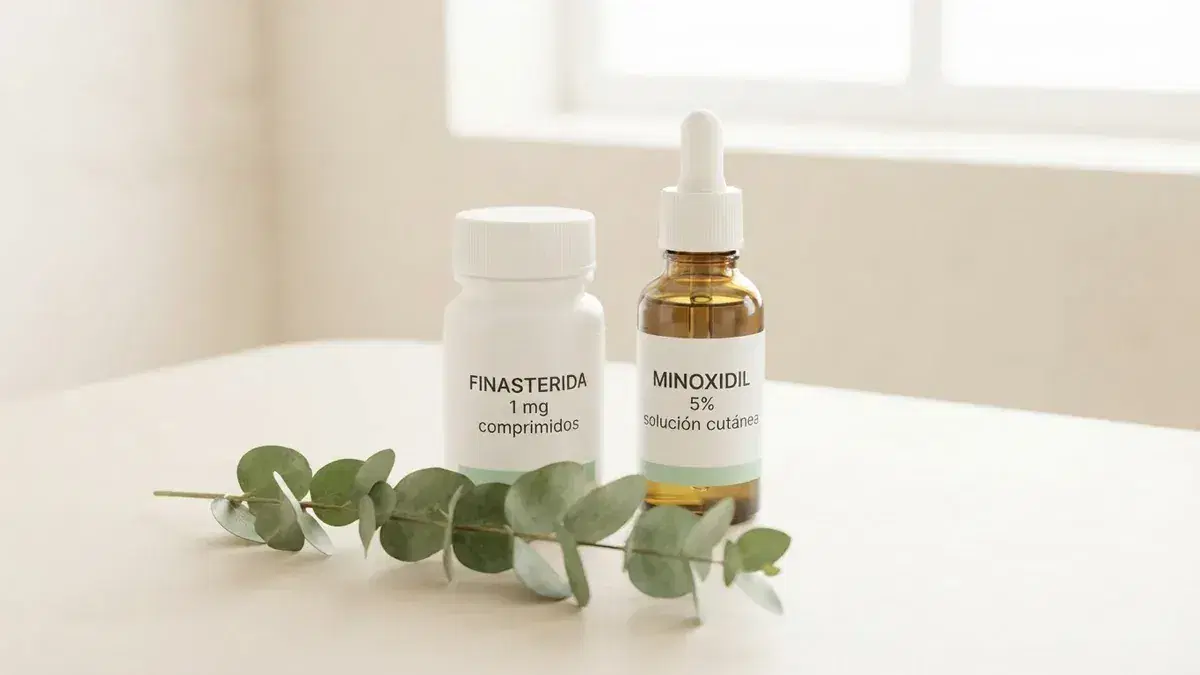
Hair loss treatments primarily work by either stimulating hair growth or by blocking hormones that cause hair loss. For example, minoxidil is a topical solution that improves blood flow to hair follicles, encouraging them to grow. Finasteride and dutasteride are oral medications that inhibit DHT, a hormone that shrinks hair follicles. These treatments aim to slow down hair loss, promote regrowth, and increase hair density. They do not, however, cure hair loss, and consistent use is necessary to maintain results. Expect to see initial improvements within 3-6 months, with full results often taking 12 months or more. They will not regrow hair in areas where follicles are completely dormant or scarred.
Don't see your condition on Hi-Doctor yet?
Hi-Doctor is continuously onboarding EU-licensed specialists across new conditions. Register your interest and we'll notify you the moment a doctor is available for your case. In the meantime, see how the service works: online consultation for €45 every 90 days or €35 one-off, reply within 24 h, full refund if the doctor decides the treatment isn't appropriate.
Side effects and when to stop
Like all medications, hair loss treatments can have side effects. Common side effects for minoxidil include scalp irritation, itching, or unwanted hair growth in other areas. Finasteride and dutasteride can cause sexual side effects such as decreased libido, erectile dysfunction, or ejaculation disorders in a small percentage of users. If you experience any severe or persistent side effects, or if your hair loss continues to worsen despite consistent treatment, it is important to consult a doctor. They can help you decide if adjusting your dosage, switching to a different treatment, or stopping the medication is appropriate.
Why Hi-Doctor vs. walking into a clinic
Choosing Hi-Doctor for your hair loss treatment prescription offers unparalleled convenience and efficiency. Forget about waiting weeks for an appointment or spending time traveling to a clinic. With Hi-Doctor, everything happens in the app: you get a medical review and, if appropriate, a prescription in under 24 hours. Our consultation fee of €45 every 90 days or €35 one-off is transparent, with a money-back guarantee if treatment is not approved. Our private, RGPD-compliant chat ensures your privacy, unlike a public reception desk. Join over 50,000 satisfied patients who trust Hi-Doctor, reflected in our 4.8 Trustpilot rating. Get your hair loss treatment prescription online, fast, and discreetly.
Your interest guides which specialists we add next.
If your treatment isn't yet among Hi-Doctor's covered specialties, register at hi-doctor.ai so a doctor can notify you the moment we can handle your case. Our EU-licensed doctors issue electronic prescriptions as a PDF valid at any EU pharmacy, and if the doctor decides the treatment isn't appropriate, the consultation fee is refunded automatically.
COMMON QUESTIONS
Frequently asked questions
If our EU-licensed doctor determines that hair loss treatment is not appropriate for you, your consultation fee is refunded automatically. You pay nothing if the treatment isn't approved.