Hair growth6 minute read
Birth Control and Hair Loss: What Women Need to Know
Experiencing hair loss and suspect your birth control is the cause? Get an online consultation with an EU-licensed doctor for just €45 every 90 days or €35 one-off. Receive a prescription (if appropriate) in under 24 hours, valid at any…

DIRECT ANSWER
An online consultation lets an EU-licensed doctor review your case and, if appropriate, issue an electronic prescription; each pharmacy decides whether it can dispense it.
Doctor reply in under 2 hours
Average doctor reply under 2 hours; at night and on public holidays it can take longer, always within 24 hours. A prescription only if appropriate.
EU-licensed doctors
Every case is reviewed by an EU-licensed doctor.
Electronic prescription
Each pharmacy decides whether it can dispense an approved prescription; some do not accept PDF prescriptions.
Worried about hair loss and wondering if your birth control is to blame? You’re not alone. Many women experience hair thinning or shedding while on hormonal contraceptives. The good news is, you can consult with a licensed EU doctor online to understand the cause and explore potential solutions. For just €45 every 90 days (cancel anytime) or €35 one-off, an EU-licensed doctor will review your case, and if treatment is appropriate, you’ll receive an electronic prescription within 24 hours, valid at any pharmacy across the EU. If the doctor determines treatment is not right for you, your fee is refunded automatically, so there is no risk.
How it works: get your prescription in 4 steps
- Fill out the online medical questionnaire (2–3 minutes) and pay the consultation fee of €45 every 90 days or €35 one-off.
- A licensed EU doctor reviews your case privately. If the doctor decides the treatment is not appropriate, your payment is refunded automatically, so there is no risk.
- If approved, you receive a valid electronic prescription (PDF file) in your Hi-Doctor account and by email within 24 hours.
- Print the PDF or show it on your phone and present it at any pharmacy in the EU to collect your medication.
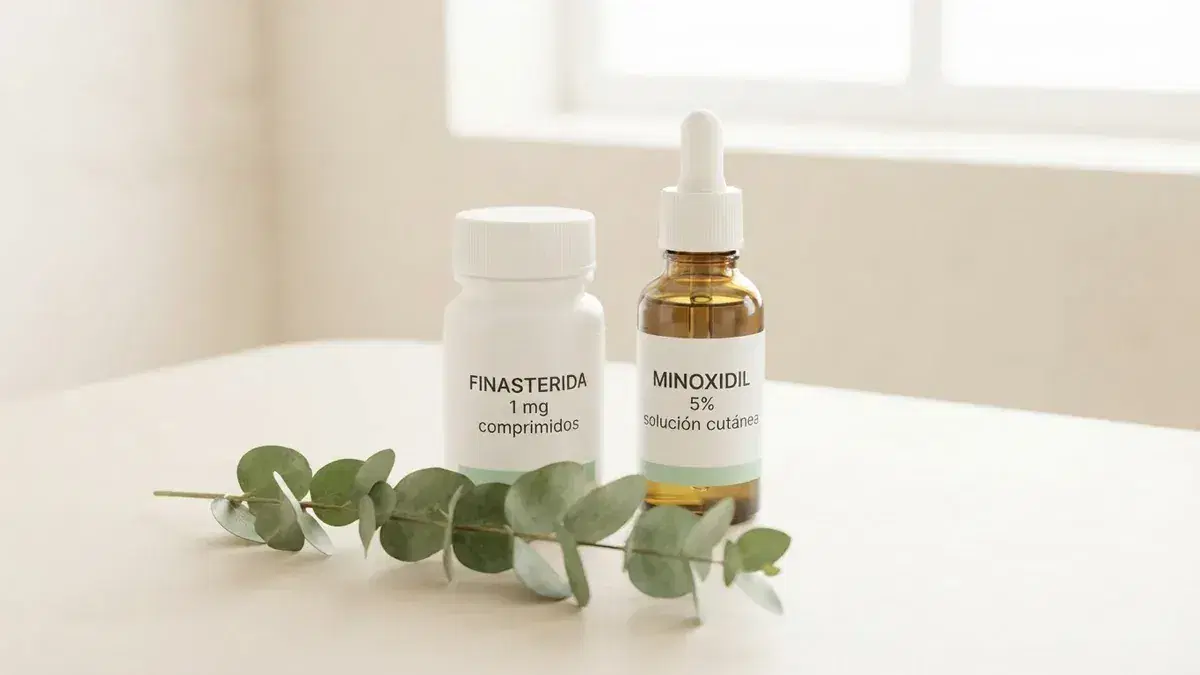
Who qualifies for hair loss treatments (like minoxidil or finasteride)
Our EU-licensed doctors assess each patient individually to determine the most appropriate course of action for hair loss related to birth control. They look for specific criteria:
- A clear medical history of hair loss, including onset and progression.
- Current or past use of hormonal birth control, and correlation with hair changes.
- No underlying medical conditions that contraindicate specific treatments (e.g., pregnancy for finasteride).
- For finasteride, doctors ensure you are not pregnant or planning to become pregnant, as it is unsafe during gestation.
- General good health and no known allergies to the proposed medications.
The doctor will consider factors like the type of birth control you are using, its androgenic activity, and your overall health profile to recommend a suitable treatment plan.
Don't see your condition on Hi-Doctor yet?
Hi-Doctor is continuously onboarding EU-licensed specialists across new conditions. Register your interest and we'll notify you the moment a doctor is available for your case. In the meantime, see how the service works: online consultation for €45 every 90 days or €35 one-off, reply within 24 h, full refund if the doctor decides the treatment isn't appropriate.
What hair loss treatments (like minoxidil) actually do (and don't do)
Treatments for birth control-related hair loss, such as minoxidil, work by stimulating hair follicles and prolonging the anagen (growth) phase of the hair cycle. Minoxidil, a topical solution, improves blood flow to the scalp, delivering more oxygen and nutrients to the follicles. You typically apply it twice daily. Expect to see initial results, like reduced shedding, within 2–4 months, with significant new growth often visible after 6–12 months of consistent use.
It’s important to understand that these treatments manage hair loss; they do not cure the underlying hormonal fluctuations if you continue with the same birth control. They help restore and maintain hair density. Finasteride, if prescribed off-label for women, works differently by blocking the conversion of testosterone to DHT, a hormone that can shrink hair follicles. Neither treatment offers instant results, and consistency is key for effectiveness.
Side effects and when to stop treatment
Like all medications, treatments for hair loss can have side effects. For minoxidil, common side effects include scalp irritation, itching, or dryness. In rare cases, unwanted hair growth on other body parts can occur if the product drips. For finasteride, potential side effects in women can include hormonal changes, though it is typically prescribed in lower doses. It is crucial to stop finasteride immediately if you become pregnant or are planning to conceive.
You should stop any treatment and consult a doctor if you experience severe allergic reactions, significant scalp inflammation, unexpected rapid hair shedding (beyond initial adjustment), or any other concerning symptoms. Always discuss potential side effects with your Hi Doctor physician during your online consultation.
Why Hi-Doctor vs. walking into a clinic
Choosing Hi-Doctor for your birth control-related hair loss concerns offers unparalleled benefits compared to traditional in-person clinic visits:
- Speed: Get an EU-licensed doctor's review and a prescription (if appropriate) in under 24 hours. No more waiting weeks for an appointment.
- Price: €45 every 90 days or €35 one-off for the online consultation, with a money-back guarantee if treatment isn't approved. Avoid variable private clinic fees.
- Privacy: Everything happens securely within your Hi-Doctor account. No reception desks, no waiting rooms, just discreet, RGPD-compliant communication.
- Convenience: Consult with a doctor from your phone or computer, wherever you are in the EU. Skip the travel and city-centre hassle.
- Trust: Join over 50,000 satisfied patients. We boast a 4.8 Trustpilot rating, reflecting our commitment to patient care and service.
- EU-wide validity: Your electronic prescription is valid at any pharmacy in the EU, ensuring easy access to medication.
Your interest guides which specialists we add next.
If your treatment isn't yet among Hi-Doctor's covered specialties, register at hi-doctor.ai so a doctor can notify you the moment we can handle your case. Our EU-licensed doctors issue electronic prescriptions as a PDF valid at any EU pharmacy, and if the doctor decides the treatment isn't appropriate, the consultation fee is refunded automatically.
COMMON QUESTIONS
Frequently asked questions
If the doctor determines that the treatment is not appropriate for your case, your consultation fee is refunded automatically — you pay nothing if the treatment isn't approved.