Sexual health6 minute read
Hypogonadism and Sexual Dysfunction: A Comprehensive Guide
Struggling with hypogonadism or sexual dysfunction? Get your prescription for treatment online from an EU-licensed doctor. Hi-Doctor offers a €35 consultation, prescription in <24 hours, valid at any EU pharmacy.
DIRECT ANSWER
An online consultation lets an EU-licensed doctor review your case and, if appropriate, issue an electronic prescription; each pharmacy decides whether it can dispense it.
Doctor reply in under 2 hours
Average doctor reply under 2 hours; at night and on public holidays it can take longer, always within 24 hours. A prescription only if appropriate.
EU-licensed doctors
Every case is reviewed by an EU-licensed doctor.
Electronic prescription
Each pharmacy decides whether it can dispense an approved prescription; some do not accept PDF prescriptions.
If you're searching for a hypogonadism treatment prescription online in the EU, you've come to the right place. Hi-Doctor connects you with EU-licensed doctors who can assess your condition and, if appropriate, issue a prescription for testosterone replacement therapy (TRT) or other treatments for sexual dysfunction. Our process is fast, discreet, and designed for your convenience: a €35 online consultation, a digital prescription in under 24 hours, and validity at any pharmacy across the EU.
How it works: get your hypogonadism treatment prescription in 4 steps
- Fill the online medical questionnaire (2–3 minutes) and pay the €35 consultation fee. This detailed questionnaire helps our doctors understand your symptoms and medical history.
- A licensed EU doctor reviews your case in private. Our doctors individually assess every submission. If the doctor determines the treatment is NOT appropriate for you, your €35 fee is refunded automatically — you pay nothing. There's no risk.
- If approved, you receive a valid electronic prescription (PDF file) in your Hi-Doctor account and by email within 24 hours. This is Spain's official digital private prescription standard.
- Print the PDF or show it on your phone and present it at any pharmacy in the EU to collect your medication. Your electronic prescription is valid at any pharmacy in Spain, Portugal, Italy, France, Germany, Netherlands, Belgium, Austria, Ireland, and other EU countries under cross-border prescription directive 2011/24/EU.
Who qualifies for hypogonadism treatment
Our EU-licensed doctors look for specific criteria to determine if hypogonadism treatment, such as testosterone replacement therapy (TRT), is appropriate for you. Generally, diagnosis involves consistent symptoms of low testosterone combined with blood tests showing low testosterone levels. Symptoms often include decreased libido, erectile dysfunction, reduced muscle mass, increased body fat, fatigue, and mood changes. The doctor will assess your full medical history and current health status to ensure treatment is safe and effective.
What hypogonadism treatment actually does (and doesn't do)
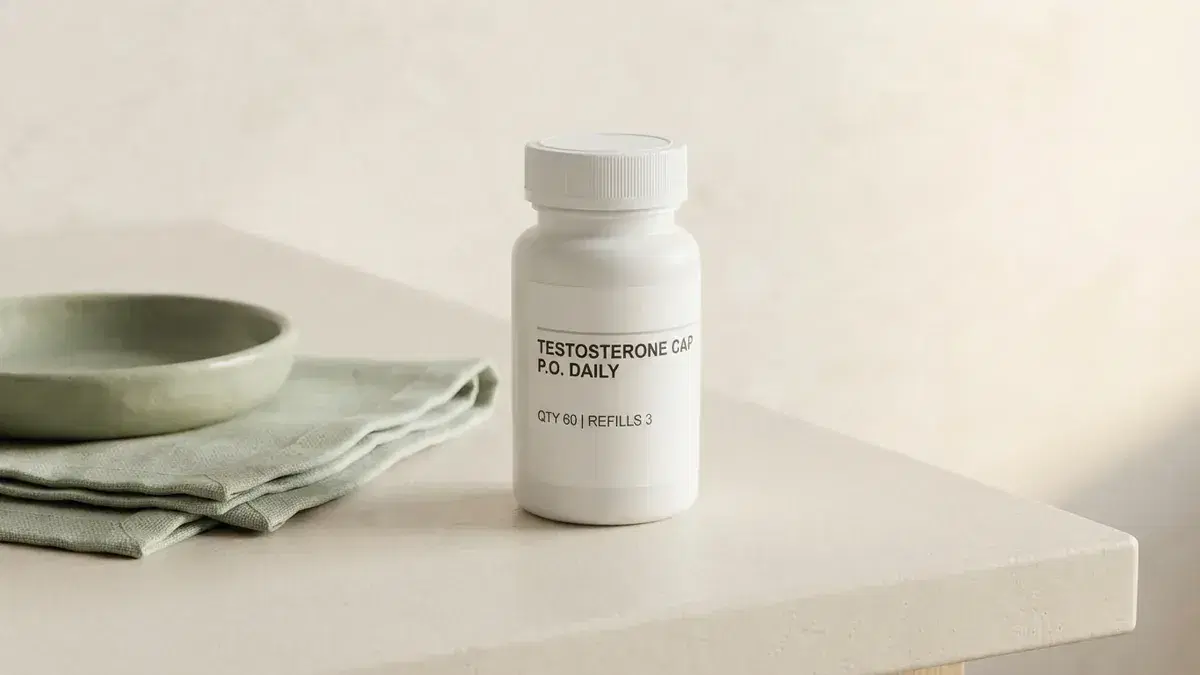
Testosterone Replacement Therapy (TRT) aims to restore your testosterone levels to a normal range, alleviating symptoms of hypogonadism. You can expect potential improvements in libido, erectile function, energy levels, mood, and muscle mass. Some changes, like improved energy, may be noticeable within weeks, while others, such as muscle mass improvements, can take several months. TRT does not cure hypogonadism, meaning ongoing treatment is usually necessary to maintain benefits. It also doesn't replace the need for a healthy lifestyle, which remains crucial for overall well-being.
Don't see your condition on Hi-Doctor yet?
Hi-Doctor is continuously onboarding EU-licensed specialists across new conditions. Register your interest and we'll notify you the moment a doctor is available for your case. In the meantime, see how the service works: €35 online consultation, reply within 24 h, full refund if the doctor decides the treatment isn't appropriate.
Side effects and when to stop
Like all medications, testosterone replacement therapy can have side effects. Common ones include acne, fluid retention, and changes in mood. More serious, though less common, side effects can include sleep apnea, increased red blood cell count, and potential prostate issues. Your doctor will monitor you closely during treatment. You should contact your doctor immediately if you experience severe headaches, vision changes, chest pain, or swelling in your ankles. Never stop TRT abruptly without consulting your doctor, as this can lead to withdrawal symptoms.
Why Hi-Doctor vs. walking into a clinic
Choosing Hi-Doctor for your hypogonadism treatment offers significant advantages over traditional in-person clinic visits:
- Speed: Get your prescription in under 24 hours, compared to weeks or months for an appointment at a physical clinic.
- Price: A flat €35 consultation fee, with a money-back guarantee if treatment isn't approved. Private clinic fees can be variable and much higher.
- Privacy: All consultations and communication happen securely within your private Hi-Doctor account. No waiting rooms, no reception desks, no awkward conversations in public.
- Convenience: Access expert medical care from the comfort of your home, using your phone or computer. No travel, no parking, no time off work.
- Trust: Join over 50,000 patients served, with a 4.8 Trustpilot rating. Our EU-licensed doctors provide discreet, RGPD-compliant care.
Your interest guides which specialists we add next.
If your treatment isn't yet among Hi-Doctor's covered specialties, register at hi-doctor.ai so a doctor can notify you the moment we can handle your case. Our EU-licensed doctors issue electronic prescriptions as a PDF valid at any EU pharmacy, and if the doctor decides the treatment isn't appropriate, the €35 consultation fee is refunded automatically.
COMMON QUESTIONS
Frequently asked questions
If our EU-licensed doctor determines that the treatment is not appropriate for your specific case, your €35 consultation fee is refunded automatically. You pay nothing if the treatment isn't approved, making the consultation risk-free.