Sexual health12 minute read
Erectile dysfunction: the online medical consultation
Understand erectile difficulties and prepare for a medical conversation about symptoms, health history and the limits of online assessment.
DIRECT ANSWER
An online consultation lets an EU-licensed doctor review your case and, if appropriate, issue an electronic prescription; each pharmacy decides whether it can dispense it.
Doctor reply in under 2 hours
Average doctor reply under 2 hours; at night and on public holidays it can take longer, always within 24 hours. A prescription only if appropriate.
EU-licensed doctors
Every case is reviewed by an EU-licensed doctor.
Electronic prescription
Each pharmacy decides whether it can dispense an approved prescription; some do not accept PDF prescriptions.
HOW IT WORKS
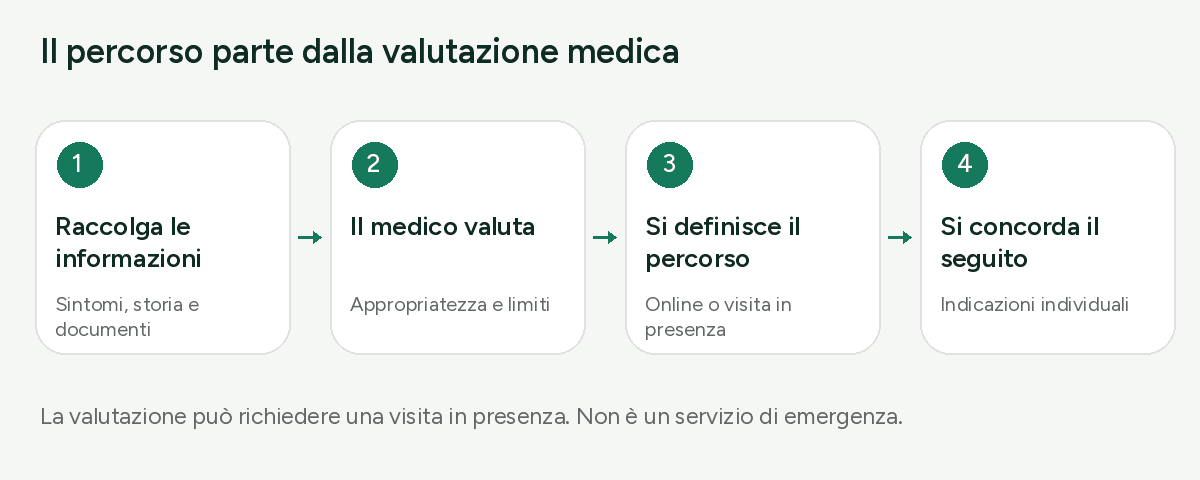
From consultation to collection
- 1
Consultation
Answer a secure medical questionnaire online.
- 2
Doctor reviews
An EU-licensed doctor personally assesses your case.
- 3
Prescription only if appropriate
The doctor replies in under 2 hours on average and issues a prescription only if it is clinically appropriate.
- 4
Collect at the pharmacy you choose
Take an approved prescription to the pharmacy you choose; each pharmacy decides whether it can dispense it.
This guide is designed to help you understand erectile dysfunction and prepare for a productive online medical consultation. Seeking advice from a doctor is a positive step towards managing your health, and being prepared can make the conversation easier and more effective. An online consultation offers a private and accessible way to begin this important discussion from the comfort of your home.
Erectile dysfunction is a common health issue that affects many men at some point in their lives, and it is important to know that you are not alone [1]. While occasional difficulties with erections can be caused by everyday factors like tiredness or stress, persistent problems warrant a medical evaluation [5]. Discussing this topic can feel difficult, but it is a crucial part of your overall wellbeing and a key aspect of men's sexual health. A doctor can provide a confidential assessment, help identify potential underlying causes, and discuss appropriate next steps in a professional and nonjudgmental environment.
Key takeaways
Erectile dysfunction is a common condition with a wide range of potential causes, which can be physical, psychological, or a combination of both.
Preparing for your consultation by gathering your medical history and thinking about your symptoms will help you and the doctor make the most of your time.
A thorough medical assessment is essential to identify any underlying health conditions and help the doctor assess whether any course of action is appropriate for you.
An online consultation is a convenient first step, but it has limitations; the doctor may determine that an in-person physical examination or further tests are necessary.
Understanding Erectile Dysfunction
Understanding the condition can help you describe your symptoms. It cannot establish your diagnosis or replace examination [1].
What is Erectile Dysfunction?
Erectile dysfunction is persistent difficulty achieving or maintaining an erection sufficient for satisfactory sexual activity. It can affect wellbeing and relationships and may reflect another health issue. Its causes may be physical, psychological or mixed [1].
Occasional vs. Recurrent Symptoms
Occasional erection difficulties can occur with tiredness, stress or excess alcohol. Recurring difficulties, worsening symptoms or distress are reasons to consult a doctor rather than assume a cause [5].
However, when these difficulties become frequent or progressively worse, it is considered a recurrent issue. If the problem causes you or your partner distress and consistently impacts your sexual life, it is a valid reason to seek a medical opinion. A doctor can help determine if there is an underlying cause that needs to be addressed [1].
The Complex Causes of Erectile Dysfunction
Erectile dysfunction is rarely caused by a single factor. More often, it results from a complex interplay of physical and psychological elements. A successful erection depends on the healthy function of the brain, hormones, nerves, muscles, and blood vessels, and a problem with any of these can contribute to the condition [2].
Physical Health Factors
Many physical conditions can affect the blood flow and nerve signals necessary for an erection. Vascular diseases, which affect blood circulation, are among the most common causes. Conditions such as high blood pressure, atherosclerosis (hardening of the arteries), and heart disease can restrict blood flow to the penis [2]. Neurological disorders that interfere with the brain's ability to send signals to the penis can also play a role. Furthermore, hormonal imbalances can impact libido and erectile function. Chronic conditions like diabetes are also strongly associated with an increased risk of erectile dysfunction due to their effects on both blood vessels and nerves [1].
Psychological and Emotional Factors
Stress, anxiety, depression and relationship difficulties can affect sexual function. Emotional factors can contribute alongside a physical condition; having stress does not rule out another cause. A doctor can explore both without assigning blame [1, 2].
The Role of Lifestyle and Medications
Certain lifestyle choices can significantly impact erectile function. Smoking, for example, damages blood vessels and can impair circulation throughout the body, including to the penis [1]. Excessive alcohol intake and the use of illicit substances can also interfere with erections. On the other hand, regular physical activity and a healthy diet can improve cardiovascular health and may have a positive effect.
Additionally, some prescribed medications for other health conditions can have side effects that contribute to erectile dysfunction [2]. It is crucial to provide your doctor with a complete list of all medications you take, including over-the-counter products and supplements. You should never stop taking a prescribed medication without first consulting the doctor who prescribed it [4].
Preparing for Your Online Medical Consultation
An online assessment relies on the information you provide and cannot replace the physical part of an evaluation. Preparing an accurate history helps the doctor decide what further assessment is needed [3].
Gathering Your Medical Information
Before your consultation, compile a summary of your medical history. This should include any chronic conditions you have been diagnosed with, such as diabetes, high blood pressure, or heart conditions. Also, make a note of any past surgeries or injuries, particularly those involving the pelvic area, spine, or prostate [3]. The more comprehensive this information is, the better the doctor can understand your overall health profile.
Listing Your Current Medications
Create a complete list of everything you are currently taking. This includes all prescription medications, over-the-counter drugs, vitamins, and herbal supplements [3]. The name of each item is important. Some substances can interact with each other or contribute to erectile dysfunction, so this list is vital for a safe assessment. Remember, do not make any changes to your current medications unless you are specifically advised to do so by a medical professional [4].
Thinking About Your Symptoms and Sexual History
Be ready to discuss the specifics of your symptoms. A doctor will likely ask questions to understand the nature of the problem [3]. Consider the following:
- When did the problem start?
- Does it happen in all sexual situations or only in some?
- Are you able to get an erection at other times, such as during sleep or upon waking?
- Have you noticed any changes in your level of sexual desire (libido)?
- Are there any issues with ejaculation or orgasm?
- How is this issue affecting you and your relationship?
Thinking about these questions in advance can help you provide clear and concise answers during your consultation with one of our doctors.
The 4-Step Process for an Effective Online Discussion
Use these steps to organise the conversation. They are a preparation aid, not a way to diagnose yourself or obtain a particular treatment.
- Describe Your Main Concern Clearly
Start by explaining the problem in your own words. Describe what you are experiencing, how often it happens, and how long it has been an issue. Be direct and honest; doctors are trained to discuss these matters professionally and without judgment.
- Share Your Complete Medical and Personal History
Present the medical information you gathered, including past and present health conditions and your full list of medications. The doctor will also need to know about your lifestyle habits, such as your diet, exercise routine, alcohol consumption, and whether you smoke.
- Discuss Your Lifestyle and Emotional Wellbeing
Talk about any significant stressors in your life, your mood, and the state of your personal relationships. This information provides crucial context, as psychological factors are often intertwined with physical ones [2]. This helps the doctor get a holistic view of your situation.
- Ask Your Questions and Understand the Next Steps
Use the list of questions you prepared. Do not hesitate to ask for clarification on anything you do not understand. Make sure you are clear about the doctor's recommendations and what the next steps might be, whether it is lifestyle advice, a recommendation for further testing, or a referral.
What to Expect During and After the Consultation
Knowing what the process entails can help reduce any anxiety you may have about seeking help. An online consultation is a structured medical assessment adapted for a remote setting.
The Doctor's Assessment
During the consultation, a doctor will carefully review the information you have provided through your questionnaire and any direct communication. They will use your medical history, symptom description, and lifestyle details to build a clinical picture. For Hi Doctor, a doctor licensed in Spain assesses each case and decides whether an online consultation or any treatment is appropriate. Any prescription is issued in Spain; it is not an Italian Sistema TS/NRBE prescription. Each pharmacy decides whether it can dispense it under the applicable rules, and a paper copy may be needed. If the doctor declines, Hi Doctor refunds the full consultation fee. Medical communication takes place in the in-app private account chat. The goal is to determine the likely contributing factors and to screen for contraindications before any treatment is considered.
Limitations of an Online Consultation
It is essential to recognise the inherent limitations of a remote consultation. The primary limitation is the inability to perform a physical examination [3]. A doctor cannot check your blood pressure, listen to your heart, or perform a physical examination of the genital area. Because of this, the doctor may conclude that an online assessment is not sufficient for your specific situation and may recommend that you see a doctor in person for a physical evaluation.
Potential Next Steps
Following the assessment, the doctor will outline their recommendations. These are tailored to your individual circumstances. The next steps could include [4]:
- Lifestyle modifications: Advice on diet, exercise, reducing alcohol intake, or quitting smoking.
- Psychological support: A recommendation to speak with a counsellor or therapist if stress or anxiety appear to be significant factors.
- Referral for further testing: The doctor may suggest you visit a local clinic for blood tests to check hormone levels, blood sugar, or cholesterol.
- Referral to a specialist: In some cases, a referral to a urologist or another specialist for a more in-depth, in-person evaluation may be necessary.
| Feature | In-Person Consultation | Online Consultation |
|---|---|---|
| Convenience | Requires travel and scheduling; may involve waiting times. | Accessible from home, depending on the service. |
| Physical Examination | Allows for a complete physical check-up, including blood pressure and genital exam. | Not possible; assessment relies entirely on patient-provided information. |
| Privacy | Takes place in a clinical setting. | Requires a private setting and identity verification; it is not anonymous. |
| Immediate Tests | Blood tests or other diagnostics can sometimes be done on-site. | Requires a separate visit to a laboratory or clinic if tests are needed. |
When to see a doctor
You should consider consulting a doctor if you experience persistent or worsening difficulty achieving or maintaining an erection, especially if it is causing you or your partner distress. While it can be a sensitive topic, it is a legitimate health concern that deserves medical attention.
In certain situations, you should seek urgent medical assessment. An erection that is painful or persists unusually long requires urgent in-person medical attention; do not wait for an online reply [4]. Additionally, if your erectile difficulties are accompanied by symptoms such as chest pain, severe shortness of breath, or fainting, these could be signs of a serious underlying cardiovascular issue and require immediate attention.
Sources
COMMON QUESTIONS
Frequently asked questions
While the incidence of erectile dysfunction does increase with age, it is not an inevitable consequence of getting older [1]. Many older men maintain healthy sexual function. It is always worth investigating, as it is often a sign of a treatable underlying medical condition rather than just age itself.