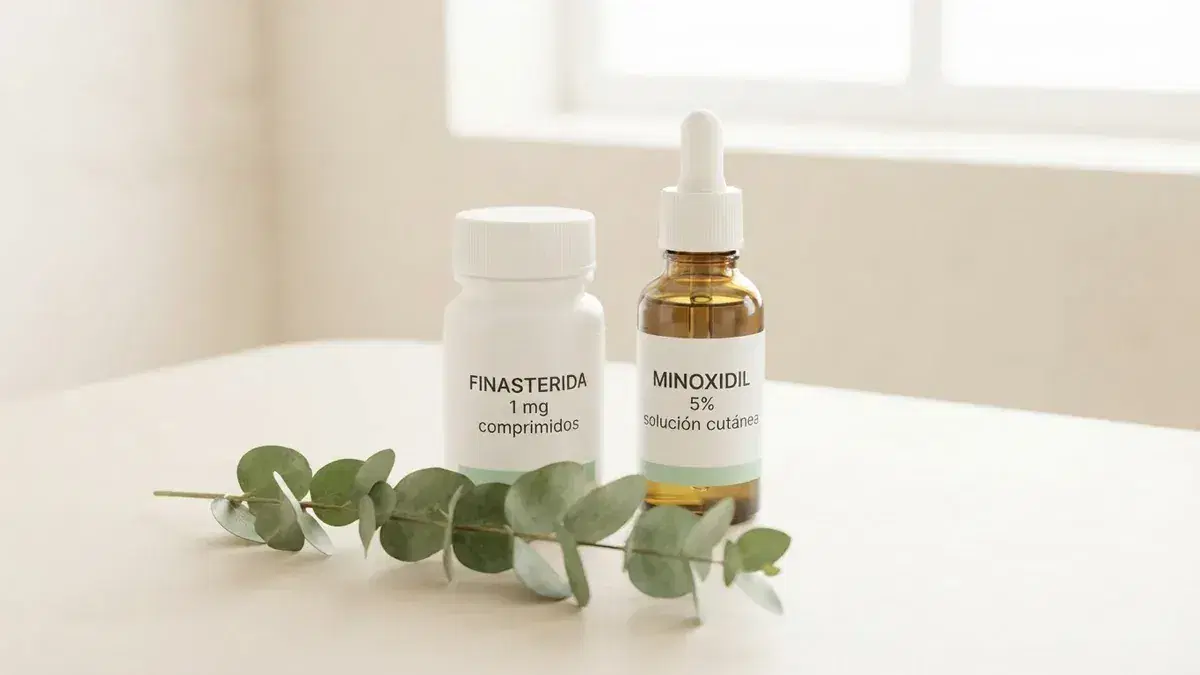
Hair growth5 minute read
Dutasteride vs. Finasteride: A Hair Regrowth Showdown
Get Finasteride or Dutasteride prescription online from an EU-licensed doctor for €25. Receive your electronic prescription in under 24 hours, valid at any EU pharmacy. Combat hair loss discreetly and effectively.
DIRECT ANSWER
An online consultation lets an EU-licensed doctor review your case and, if appropriate, issue a prescription that is valid across the EU.
Doctor reply in under 2 hours
Average doctor reply under 2 hours; prescription within 24 hours if approved.
EU-licensed doctors
Every case is reviewed by a licensed clinician.
Valid across the EU
Approved prescriptions can be used at any EU pharmacy.
If you're looking to get a Finasteride prescription online or consider Dutasteride, you've come to the right place. Hi Doctor connects you with EU-licensed doctors who review your case individually. For an online consultation for 45 € every 90 days (cancel anytime) or 35 € one-off, you can receive a valid electronic prescription in under 24 hours, delivered directly to your private account and email. This prescription is valid at any EU pharmacy, making it simple to get your medication in Spain, Portugal, Italy, France, Germany, or anywhere else in the EU.
How it works: get your Finasteride prescription in 4 steps
- Fill the online medical questionnaire (2–3 minutes).
- A licensed EU doctor reviews your case in private.
- If the doctor finds treatment appropriate, you receive a valid electronic prescription within 24 hours.
- Pick up your medication at any EU pharmacy.
Who qualifies for Finasteride (or Dutasteride)
Our EU-licensed doctors individually assess each case to determine if Finasteride or Dutasteride is appropriate for you. They look for specific criteria, ensuring your safety and the treatment's effectiveness. Generally, these medications are for adult men experiencing male pattern baldness (androgenetic alopecia). Contraindications include women (especially pregnant women), children, and individuals with certain liver conditions or known hypersensitivity to the drug. The doctor will review your full medical history in the questionnaire to ensure the treatment is safe and suitable.
What Finasteride actually does (and doesn't do)
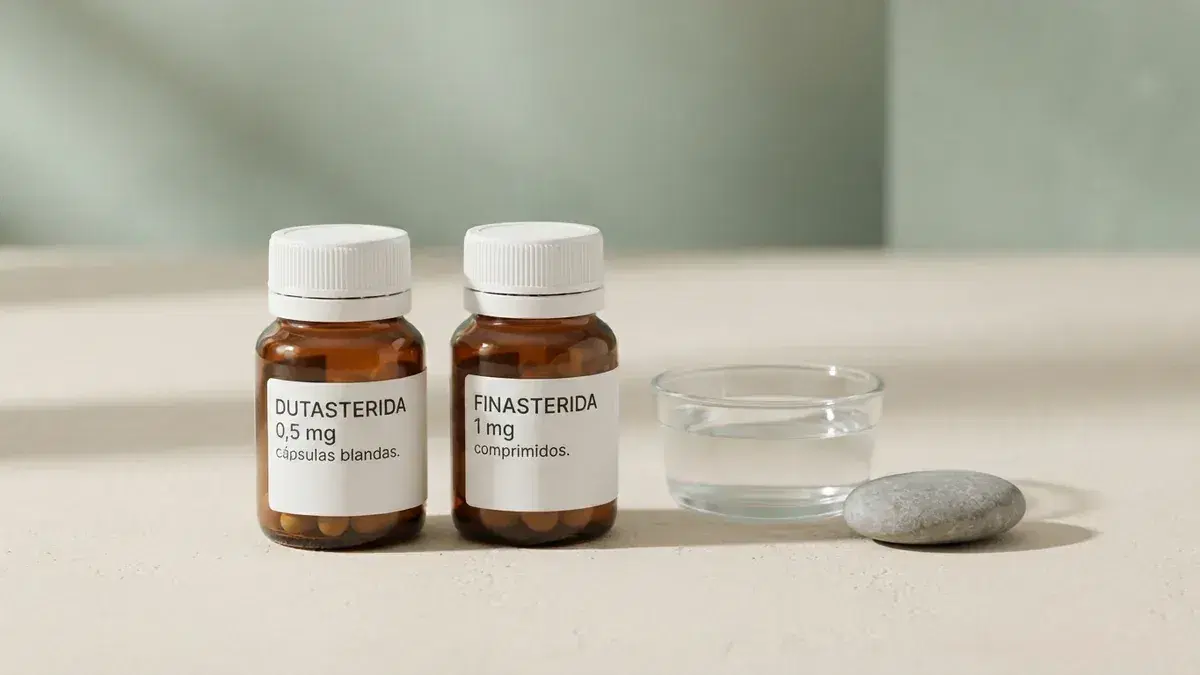
Finasteride works by targeting the root cause of male pattern baldness: DHT. Your body converts testosterone into dihydrotestosterone (DHT) using an enzyme called 5-alpha-reductase type 2. Finasteride inhibits this enzyme, significantly reducing DHT levels in your scalp. This reduction helps to prevent further hair follicle miniaturization and can stimulate regrowth of existing, but dormant, follicles. Dutasteride, on the other hand, is a dual inhibitor, blocking both Type 1 and Type 2 5-alpha-reductase enzymes, leading to an even more profound reduction in DHT. Both medications are highly effective for stopping hair loss and promoting regrowth, but they do not grow hair on completely bald areas where follicles are no longer active. You typically see initial results within 3–6 months, with full effects appearing after 12 months of consistent use.
Side effects and when to stop
While generally well-tolerated, Finasteride and Dutasteride can have side effects. These are rare and usually reversible upon stopping the medication. Common side effects may include decreased libido, erectile dysfunction, ejaculation disorders, or breast tenderness (gynecomastia). Mood changes, including depression, have also been reported in a small percentage of users. It's crucial to report any persistent or concerning side effects to your doctor. If you experience severe allergic reactions, swelling of the face or tongue, or significant mood disturbances, stop the medication and seek immediate medical attention. Your Hi Doctor prescribing doctor can provide guidance through the private, RGPD-compliant chat in your account.
Why Hi-Doctor vs. walking into a clinic
Choosing Hi Doctor for your Finasteride or Dutasteride prescription offers significant advantages over traditional clinic visits:
- Speed: Get your prescription in under 24 hours compared to weeks for a doctor's appointment.
- Price: An online consultation fee of 45 € every 90 days or 35 € one-off, without hidden costs or variable private clinic charges.
- Privacy: Everything happens securely within our app – no waiting rooms, no in-person visits, no awkward conversations at a reception desk. Our chat is private and RGPD-compliant.
- Convenience: Access expert medical advice and prescriptions from your phone, anywhere in the EU.
- Trust: Join over 50,000 patients served, with a 4.8 Trustpilot rating. Our EU-licensed doctors review every case individually.
COMMON QUESTIONS
Frequently asked questions
Yes, it is legal to obtain a Finasteride prescription online from an EU-licensed doctor. Hi Doctor connects you with such doctors who issue valid electronic prescriptions after a thorough medical review.