Hair growth7 minute read
Estrogen Dominance and Male Hair Loss: An Emerging Theory
Concerned about hair loss and hormonal balance? Discover how estrogen dominance might play a role in male hair loss. Get an online consultation with an EU-licensed doctor for just €45 every 90 days or €35 one-off.

DIRECT ANSWER
An online consultation lets an EU-licensed doctor review your case and, if appropriate, issue an electronic prescription; each pharmacy decides whether it can dispense it.
Doctor reply in under 2 hours
Average doctor reply under 2 hours; at night and on public holidays it can take longer, always within 24 hours. A prescription only if appropriate.
EU-licensed doctors
Every case is reviewed by an EU-licensed doctor.
Electronic prescription
Each pharmacy decides whether it can dispense an approved prescription; some do not accept PDF prescriptions.
While dihydrotestosterone (DHT) is widely recognized as a primary culprit in male pattern baldness (androgenetic alopecia), emerging research suggests that estrogen may also play a significant role. This article explores the theory of estrogen dominance in men and its potential link to hair loss. If you're looking for a finasteride prescription online or a minoxidil prescription online in the EU, Hi-Doctor offers a convenient solution. Get an online consultation with an EU-licensed doctor for just €45 every 90 days (cancel anytime) or €35 one-off. If appropriate, you receive a prescription in under 24 hours, valid at any EU pharmacy – and if the doctor says no, you get your money back.
How it works: get your hair loss treatment prescription in 4 steps
- Fill out a brief online medical questionnaire (2–3 minutes) and pay the consultation fee of €45 every 90 days or €35 one-off.
- An EU-licensed doctor reviews your case privately. If the doctor determines the treatment is not appropriate for you, your payment is refunded automatically, so there is no risk.
- If approved, you receive a valid electronic prescription (a downloadable PDF file) in your Hi-Doctor account and by email within 24 hours.
- Print the PDF or show it on your phone and present it at any pharmacy in the EU to collect your medication.
Understanding Estrogen and Its Role in Men
Estrogen is typically considered a female hormone, but it's also present in men, albeit at lower levels. In men, estrogen plays a crucial role in various physiological functions, including bone health, brain function, and libido. The balance between estrogen and testosterone is vital for maintaining overall health. Aromatase, an enzyme, converts testosterone into estradiol, the primary form of estrogen. When this conversion occurs excessively, it can lead to estrogen dominance.
The Theory of Estrogen Dominance in Male Hair Loss
The theory suggests that an excess of estrogen relative to testosterone can disrupt the normal hair growth cycle. Estrogen can bind to receptors in hair follicles, potentially leading to inflammation and follicle miniaturization, similar to the effects of DHT. Some researchers believe that estrogen might counteract the effects of androgens on hair follicles, contributing to thinning and hair loss, especially in individuals genetically predisposed to androgenetic alopecia.
Don't see your condition on Hi-Doctor yet?
Hi-Doctor is continuously onboarding EU-licensed specialists across new conditions. Register your interest and we'll notify you the moment a doctor is available for your case. In the meantime, see how the service works: online consultation for €45 every 90 days or €35 one-off, reply within 24 h, full refund if the doctor decides the treatment isn't appropriate.
Furthermore, estrogen dominance can indirectly affect hair health by influencing other hormones and metabolic processes. For example, it can impact the production of sex hormone-binding globulin (SHBG), which in turn affects the availability of free testosterone. Lower free testosterone levels can exacerbate the effects of estrogen, further disrupting the hormonal balance.
Symptoms and Causes of Estrogen Dominance in Men
Recognizing the symptoms of estrogen dominance is crucial for early intervention. Common symptoms include:
- Hair loss or thinning
- Erectile dysfunction
- Gynecomastia (enlarged breast tissue)
- Reduced muscle mass
- Increased body fat, particularly around the abdomen
- Fatigue
- Mood changes
Several factors can contribute to estrogen dominance in men:
- Age: As men age, testosterone levels naturally decline, while aromatase activity may increase, leading to higher estrogen levels.
- Obesity: Fat tissue contains aromatase, so obese men tend to have higher estrogen levels.
- Environmental factors: Exposure to xenoestrogens (synthetic chemicals that mimic estrogen) in plastics, pesticides, and personal care products can disrupt hormonal balance.
- Medications: Certain medications, such as anabolic steroids, can increase estrogen levels.
- Liver dysfunction: The liver plays a crucial role in metabolizing estrogen. Impaired liver function can lead to estrogen accumulation.
Diagnosis and Potential Treatment Options for Hair Loss
Diagnosing estrogen dominance typically involves a comprehensive hormone panel, including measurements of estradiol, testosterone, SHBG, and other relevant hormones. A thorough medical history and physical examination are also essential. If you are seeking a hair loss prescription online, an EU-licensed doctor will review your case to determine the most appropriate treatment.
Treatment strategies aim to restore hormonal balance and address underlying causes. Common approaches include:
- Lifestyle modifications: Weight loss through diet and exercise can reduce aromatase activity and lower estrogen levels.
- Dietary changes: Consuming a diet rich in cruciferous vegetables (broccoli, cauliflower, kale) can help detoxify excess estrogen.
- Supplements: Certain supplements, such as DIM (diindolylmethane) and chrysin, may help reduce estrogen levels or block estrogen receptors.
- Medications: Aromatase inhibitors, such as anastrozole and exemestane, can block the conversion of testosterone to estrogen. However, these medications should be used under strict medical supervision due to potential side effects.
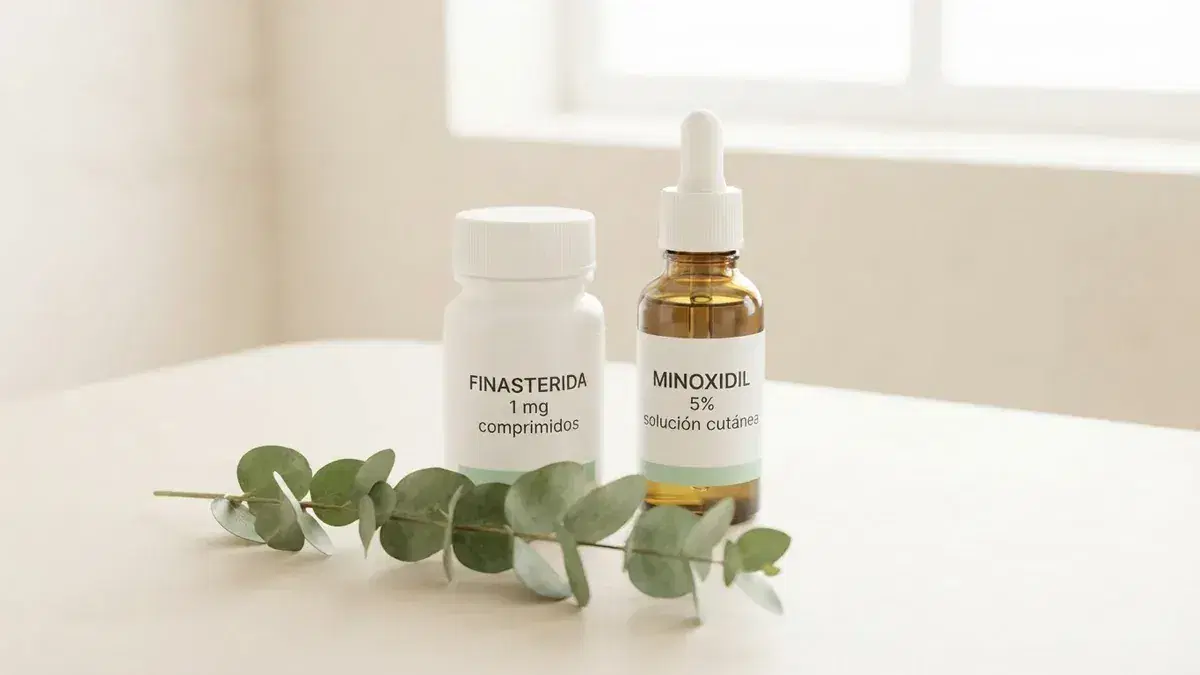
- Hair loss treatments: Medications like finasteride and minoxidil can directly address hair loss. Finasteride inhibits the conversion of testosterone to DHT, while minoxidil stimulates hair growth. An EU-licensed doctor can prescribe these if they find it appropriate for your case.
Why Hi-Doctor vs. walking into a clinic
Getting a prescription for hair loss treatment like finasteride or minoxidil online through Hi-Doctor offers significant advantages over traditional clinic visits:
- Speed: Receive your valid electronic prescription in under 24 hours, compared to weeks spent waiting for an in-person appointment.
- Price: An online consultation fee of €45 every 90 days or €35 one-off covers everything. Traditional private clinic fees can vary widely and often cost much more.
- Privacy: Everything happens within your secure, RGPD-compliant Hi-Doctor account. No reception desks, no waiting rooms, just private, auditable chat with your doctor.
- Convenience: Complete your consultation from your phone or computer, anywhere in the EU. Skip the travel and city-centre parking.
- Trust: Over 50,000 patients served with a 4.8 Trustpilot rating. Our EU-licensed doctors review every case individually.
Your interest guides which specialists we add next.
If your treatment isn't yet among Hi-Doctor's covered specialties, register at hi-doctor.ai so a doctor can notify you the moment we can handle your case. Our EU-licensed doctors issue electronic prescriptions as a PDF valid at any EU pharmacy, and if the doctor decides the treatment isn't appropriate, the consultation fee is refunded automatically.
COMMON QUESTIONS
Frequently asked questions
If the EU-licensed doctor determines that the treatment is not appropriate for your specific case, your consultation fee is refunded automatically. You pay nothing if the treatment isn't approved.