Safety information · Internal patient-safety page
Tretinoin safety summary
Topical tretinoin is a prescription retinoid used for fine lines and rough, sun-damaged skin under medical supervision.
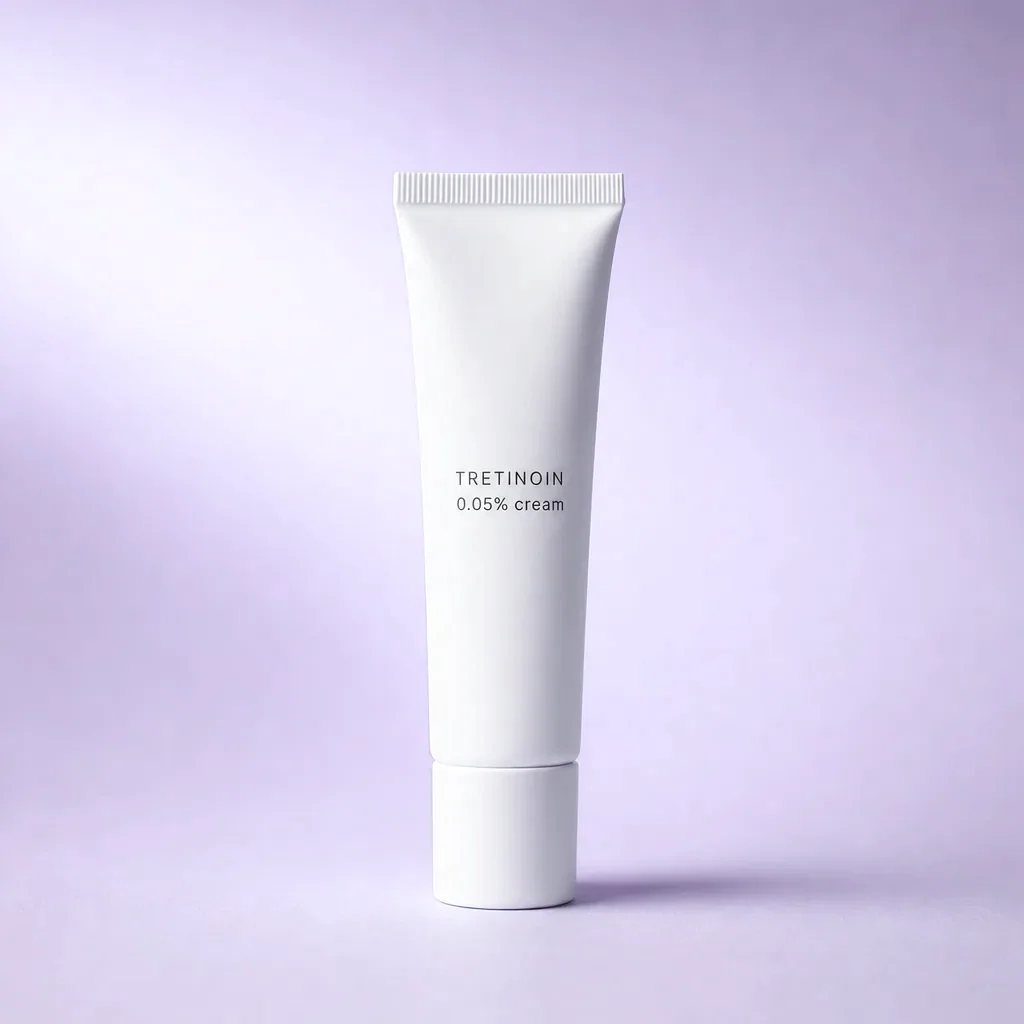
What it's used for
- Use only as prescribed on the affected skin.
- Follow the treatment plan and review schedule your doctor gives you.
Most common side effects
- Dryness, redness, peeling, warmth, burning or stinging.
- Temporary irritation while the skin adjusts.
Serious side effects: stop and seek care
- Blistering, crusting, severe swelling or intense persistent irritation.
- A severe allergic reaction or unexpected change in a skin lesion.
Who should not use it
- Pregnancy, trying to conceive, or a personal or family history of skin cancer.
- Active eczema, sunburn, broken skin or allergy to tretinoin or the cream ingredients.
Interactions to flag
- Do not combine with another retinoid; separate exfoliants, acids, peroxide and depilatory products.
- Tell the doctor about photosensitising medicines and recent skin procedures.
Message us in the app chat if you notice any of these
- Irritation is intense despite following the reduced-frequency plan.
- You become pregnant, start a photosensitising medicine or plan a skin procedure.
AEMPS CIMA: Retirides 0.5 mg/g cream
Back to your consultationThis page summarises information from the regulator-approved leaflet for reference only. It does not replace the full leaflet, linked on this page, it is not medical advice and it does not replace the assessment of an EU-licensed doctor. Your doctor will review your individual history, dose and interactions during your consultation.