Safety information · Internal patient-safety page
Tirzepatide safety summary
Tirzepatide is a dual GIP / GLP-1 receptor agonist that reduces appetite and slows gastric emptying. The dual mechanism delivers stronger weight reduction than single-pathway GLP-1 medicines in head-to-head trials. It is prescribed for chronic weight management alongside a reduced-calorie diet and increased physical activity.
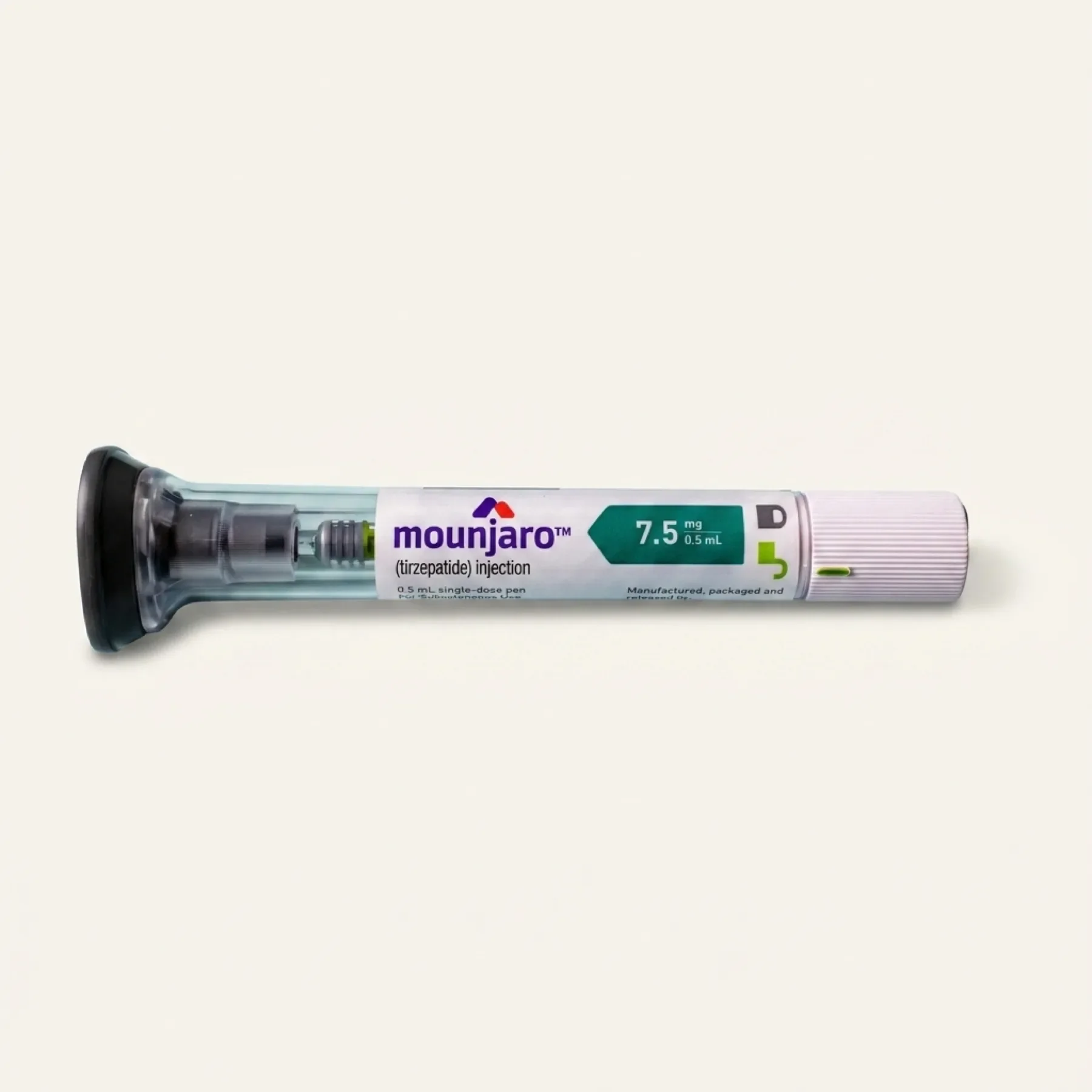
What it's used for
- Once-weekly self-injection in the thigh, abdomen or upper arm.
- Dose is escalated step-wise (2.5 mg → 5 → 7.5 → 10 → 12.5 → 15 mg) every 4 weeks while the body adapts.
- Combined with diet and physical activity, tirzepatide complements, not replaces, lifestyle change.
Most common side effects
- Nausea, vomiting and diarrhoea.
- Constipation, dyspepsia, abdominal pain.
- Decreased appetite, fatigue.
- Injection-site reactions.
- Hypoglycaemia when combined with insulin or sulfonylureas.
Serious side effects: stop and seek care
- Severe abdominal pain radiating to the back (possible pancreatitis): stop and seek urgent care.
- Gallbladder problems: sudden right-upper abdominal pain, jaundice, fever.
- Severe dehydration from prolonged vomiting / diarrhoea, risk of acute kidney injury.
- Sudden vision changes in patients with diabetic retinopathy.
- Severe allergic reaction.
Who should not take it
- Personal or family history of medullary thyroid carcinoma or MEN 2.
- Pregnancy, planned pregnancy in the next 2 months, or breastfeeding.
- History of pancreatitis.
- Type 1 diabetes or diabetic ketoacidosis.
- Severe gastroparesis.
Interactions to flag
- Insulin or sulfonylureas: risk of hypoglycaemia; the doctor may adjust those.
- Oral contraceptives: tirzepatide can reduce their absorption around the first dose and after each up-titration; a barrier method or a switch to a non-oral method is advised for 4 weeks.
- Oral medicines with a narrow absorption window: timing may need adjusting.
- Warfarin: closer INR monitoring during the first weeks.
- Alcohol: heavy use raises pancreatitis risk.
Message us in the app chat if you notice any of these
- Severe or persistent vomiting, dehydration, or inability to eat for more than 48h.
- New, severe abdominal pain that doesn't ease: A&E first.
- Pregnancy or a positive pregnancy test: stop the medicine immediately.
- A new medication or condition since your last consultation.
EMA: Mounjaro product information
Back to your consultationThis page summarises information from the regulator-approved leaflet for reference only. It does not replace the full leaflet, linked on this page, it is not medical advice and it does not replace the assessment of an EU-licensed doctor. Your doctor will review your individual history, dose and interactions during your consultation.